Best Weight Distribution Hitches for Sway Control and Stable Towing
If you tow often, a weight distribution hitch with sway control helps keep your vehicle and trailer balanced on the road. The following selections deliver reliable tongue-weight distribution, reduced trailer sway, and easier setup. Each option is suitable for American rigs and offers solid construction for long-term use. The table below highlights key specs to help you compare quickly.
| Product | Brand | Max GTW | Max Tongue Weight |
|---|---|---|---|
| CURT 17063 Round Bar Weight Distribution Hitch | CURT | 14,000 lbs | 1,400 lbs |
| VEVOR Weight Distribution Hitch (14K) | VEVOR | 14,000 lbs | 1,400 lbs |
| Reese Pro Round Bar Weight Distribution Hitch | Reese | 8,000 lbs | ~800 lbs |
| CURT 17601 TruTrack 2P Round Bar WDH | CURT | 10,000 lbs | ~1000 lbs |
| CURT 17500 TruTrack 4P WDH | CURT | 10,000 lbs | ~1000 lbs |
CURT 17063 Round Bar Weight Distribution Hitch

The CURT 17063 is designed to provide level towing and improved control by distributing trailer tongue weight across the vehicle-trailer combination. It features an integrated lubrication system with two grease zerks for continuous lubrication, reducing noise and wear. The head and forged steel spring bars contribute to reliable strength, with a capacity suitable for heavy-duty applications. This model is tailored for up to 14,000 lbs gross trailer weight and 1,400 lbs tongue weight when paired with the correct setup, offering a robust option for larger trailers.
VEVOR Weight Distribution Hitch, 14000 lbs Max

This weight distribution kit from VEVOR offers a 14,000 lbs GTW rating and 1,400 lbs tongue weight, suitable for larger trailers. It includes a 2-5/16 inch ball and a 2 in shank, designed to provide stable four-point sway control. The system redistributes tongue weight across the tow vehicle and trailer to improve steering and braking performance. It is compatible with many surge/brake actuators and V-nose trailers, delivering balanced towing under varied road conditions.
Reese Pro Round Bar WDH With Sway Control

The Reese Pro Round Bar Weight Distribution Hitch with Sway Control is designed to evenly distribute weight and reduce trailer sway for improved stability. It includes a preinstalled 2-5/16-inch hitch ball, tapered spring bars, a drop shank, control brackets, a lift-assist bar, and hardware for straightforward installation. The kit’s high-strength steel head and welded hitch bar emphasize durability, making it a solid option for mid-range towing needs while delivering dependable sway reduction.
CURT 17601 TruTrack 2P WDH

The CURT 17601 TruTrack 2P Weight Distribution Hitch with sway control provides integrated sway reduction and precise weight distribution. It uses strong round spring bars and a highly adjustable 7-hole shank to fit a 2-inch receiver, with an easy setup aided by a tilting head that enables adjustments without full disassembly. This model is well-suited for ensuring stable highway towing and controlled handling when carrying heavier loads.
CURT 17500 TruTrack 4P WDH
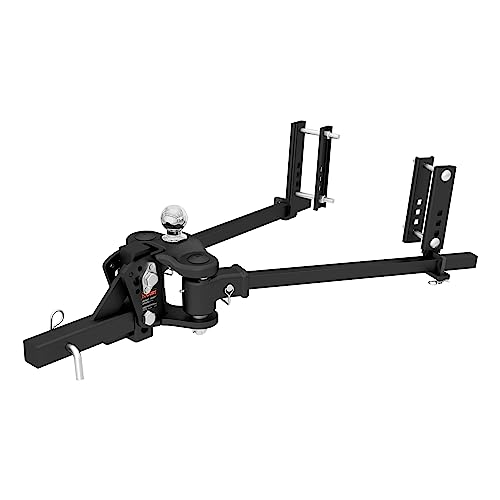
The CURT 17500 TruTrack 4P Weight Distribution Hitch actively resists trailer sway using a four-point system, which enhances stability during turns and lane changes. It provides precise levelling with a 35-9/16-inch trunnion spring bars and a 2-inch receiver-compatible adjustable shank. The tilting head and hex castle nuts simplify setup and adjustment, making it a practical option for drivers who want strong sway control and reliable weight distribution across multiple vehicle types.
Buying Guide: Key Considerations For Choosing A Sway-Controlled Weight Distribution Hitch
Choosing the right weight distribution hitch with sway control involves balancing payload, vehicle compatibility, and towing conditions. Here are important factors to consider from multiple perspectives:
- Weight rating and tongue weight: Match GTW and tongue weight ratings to your trailer’s size and load. Higher-capacity hitches support larger trailers, but ensure your tow vehicle can handle the combined load.
- Sway control mechanism: Look for four-point sway systems or integrated sway control to reduce side-to-side motion, especially in windy or uneven road conditions. Some models offer active sway reduction for improved stability at higher speeds.
- Head design and adjustability: Tilting or adjustable heads simplify setup and alignment. A tilting head reduces disassembly during adjustments and makes leveling easier.
- Shank and receiver compatibility: Verify that the shank length and receiver size match your vehicle. Common options include 2-inch receivers with 2-5/16-inch balls.
- Lubrication and maintenance: Some models include integrated lubrication for smoother operation and reduced noise, which can extend component life and improve performance.
- Durability and materials: Look for forged or welded steel construction with corrosion-resistant finishes, especially if you tow in harsh weather or salted roads.
- Vehicle and trailer compatibility: Some hitches perform better with certain trailer frames or V-nose configurations. Check manufacturer guidance for compatibility with surge/brake actuators and specialized trailers.
- Installation ease: Consider whether the hitch comes with necessary hardware and clear installation instructions. Some kits include lift-assist components to simplify mounting.
- Maintenance access: Integrated grease fittings and accessible lubrication points can simplify ongoing maintenance and help sustain performance over time.
Overall, a multi-point sway-control hitch with robust weight distribution helps stabilize towing in a variety of scenarios, from highway cruising to back-road maneuvers. The options listed provide a range of capacities and features to accommodate different trailers, tow vehicles, and user preferences, while maintaining a focus on safety and control during towing.