Best Tractor Rotary Tiller Options for Your Farm
Rotary tillers are essential for preparing seedbeds, breaking up compacted soil, and improving moisture infiltration. When selecting a tiller, consider categories like working width, horsepower compatibility, PTO drive, and build quality. Below are five well-regarded models that fit Cat. 1 tractors and typical 20–35+ horsepower ranges, along with a concise buying guide to help you compare features and performance.
| Product | Brand | Working Width | Depth (Max) | PTO & Notes |
|---|---|---|---|---|
| Farmer Helper 48″ Tiller FH-TL125 | Farmer-Helper | 48″ | Unknown | Cat I 3-point; Slip-clutch driveline; 20+ hp recommended |
| Sigma Heavy Duty 5′ Rotary Tiller | POWER PRODUCTS | 60″ | Up to ~6″ | PTO driven; 24–45 hp range |
| 45″ Rotary Tiller Attachment Cat 1 | SinolinK | 45″ | 4.7″ | PTO 540 RPM; 20–30 hp |
| Sigma Heavy Duty 4′ Rotary Tiller | POWER PRODUCTS | 48″ | Up to ~6″ | PTO driven; 20–35 hp |
| Titan Attachments 60″ Rotary Tiller | Titan Attachments | 60″ | 5″ | Cat I 3-point; 540 RPM; replaceable blades |
The following sections highlight five selected models, with direct links to their Amazon listings, key features, and insights to help you compare performance across common farming tasks such as soil aeration, clod breakup, and seedbed formation.
Farmer Helper 48 Inch Tiller FH-TL125

The Farmer Helper FH-TL125 offers a 3-point implement setup for Cat I tractors with a focus on heavy-duty field tasks. It’s designed to fit tractors that require a slip-clutch driveline and is intended for machines in the 20+ horsepower range. Its construction emphasizes sturdy connection to a front-to-rear hitch system, with the ability to handle typical soil prep duties in gardens or small farms.
Sigma Heavy Duty 3 Point Rotary Tiller 60" (5′)
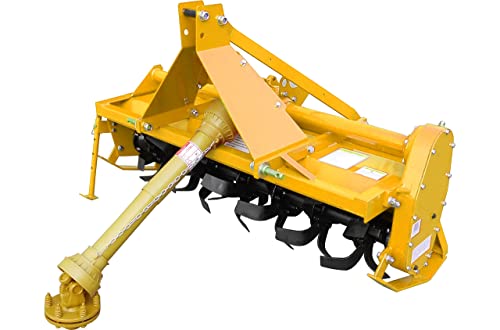
The Sigma 60″ rotary tiller features a heavy-duty cast-iron gear box, a 5-foot working width, and a PTO shaft included. It’s designed for 24–45 hp tractors and is aimed at larger garden plots or small-acreage fields. The unit’s depth capability is typically around 6 inches in ideal conditions, with depth influenced by soil texture, blade wear, and operator technique. A skid plate helps reduce resistance but does not directly control cutting depth.
45" Rotary Tiller Attachment Cat 1
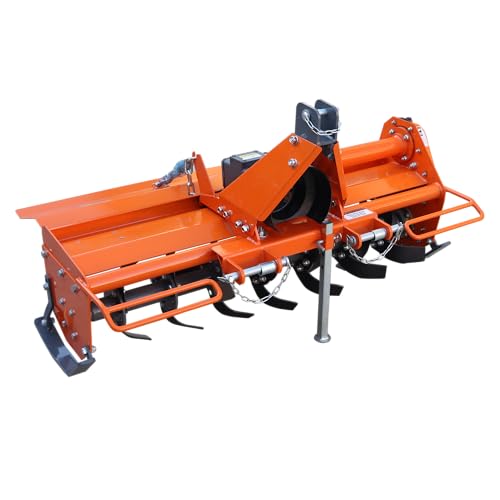
This 45″ tiller provides a more compact option for Cat 1 setups and 20–30 hp tractors. It uses a 540 RPM gearbox for PTO-driven operation and offers a maximum tillage depth around 4.7 inches. Ideal for smaller plots, raised beds, and tasks that require a balance of width and maneuverability in tighter spaces.
Sigma Heavy Duty 4′ Rotary Tiller

This Sigma 4-foot tiller is crafted for 20–35 hp Cat I tractors. It includes a PTO shaft and a heavy-duty gear box, with a maximum depth of about 6 inches under optimal conditions. The design emphasizes a balance of compact width with solid soil disruption capabilities, suitable for mid-sized garden plots and allotments where tilling efficiency is important.
Titan Attachments 60" Rotary Tiller

The Titan Attachments 60″ rotary tiller is a robust option for larger plots, offering a 60-inch width and a 5-inch tillage depth. It’s designed to fit Cat I 3-point tractors and relies on a 540 RPM gearbox with replaceable L-shaped blades. This model is well-suited for mid- to large-scale soil preparation, including orchards, nurseries, and expansive garden beds.
Buying Guide: Key Purchase Considerations
When choosing a tractor rotary tiller, weigh the following factors to ensure the attachment matches your needs and tractor specifications.
- Tractor compatibility: Most models target Cat I 3-point hitch tractors and require PTO power in the 20–45 hp range. Confirm your tractor’s horsepower, hitch category, and PTO type before purchasing.
- Working width versus maneuverability: Wider tillers cover more ground but can be harder to manuever in tight spaces. For small plots or garden beds, 45–60 inches often strikes a balance between efficiency and control.
- Depth capability and blade design: Depths around 4–6 inches are common. Blade material, blade count, and replaceable blades affect cutting performance and longevity in different soils.
- Gearbox and durability: Heavier gearboxes (often cast iron) improve longevity under demanding tasks. A skid plate can help reduce soil resistance, though it does not regulate depth directly.
- Driveline safety features: Slip-clutch or shear-pin protection helps prevent drivetrain damage when hitting rocks or tough soil clumps. Check for protective guards and smooth PTO engagement.
- Maintenance and installation: Look for ease of mounting, availability of replacement blades, and warranty terms. Some models include PTO shafts, while others require separate purchases.
- application fit: For gardens, raised beds, orchards, or nurseries, select a width and depth profile that aligns with soil type, plant spacing, and row widths you regularly work with.
- Cost of ownership: Beyond the initial price, factor in blade wear, potential gearbox servicing, and the availability of compatible spare parts for your brand.