Best Turbo Upgrades for 5.3L LS Engines
For enthusiasts seeking to boost power, reliability, and response in 5.3L LS builds, choosing the right turbo-related components matters. This guide highlights five relevant products that commonly pair with 5.3L engines to support turbocharger setups, including camshafts, rocker upgrades, and accessory relocation hardware. Each item is chosen for compatibility with 4.8/5.3/6.0 LS platforms and for delivering meaningful performance gains across street and light track use. Explore what to consider before purchasing and how these parts fit into a balanced turbo system.
| Product | Brand | Focus |
|---|---|---|
| LS Stage 2 Turbo Camshaft | BTR Brian Tooley Racing | Cam upgrade for turbo apps |
| LS Stage 2 Turbo Camshaft (Variant) | BTR Brian Tooley Racing | Cam with titanium retainers & pushrods |
| LS Stage 4 Turbo Camshaft | BTR Brian Tooley Racing | High RPM cam kit for turbo builds |
| Alternator/Power Steering Bracket Kit | ICT Billet | Relocation for turbo header clearance |
| Turbo Exhaust Manifold Kit | MMI Hotparts | T4 manifold kit for LS turbo setup |
BTR Stage 2 Turbo Camshaft Kit

The Brian Tooley Racing Stage 2 turbo camshaft is designed for cathedral port heads on 5.3 and 6.0 LS engines using a range of turbo configurations. Cam specs are 226/231 degrees of duration with lift around .610/.609 inches and a 113 LSA. The 3-bolt timing gear pattern aligns with a broad set of cam gears, making this a versatile option for street and turbocharged builds. This stage features a balance of torque and top-end RPM capability, helping turbo setups spool efficiently while maintaining driveability.
Key features include compatibility with a variety of turbochargers, proven performance in 5.3/6.0 platforms, and a robust pattern for easy installation with established LT variants. As with any cam upgrade, matching valve springs, pushrods, and overall valvetrain hardware is important to handle elevated engine speeds and boost. The kit’s cam profile emphasizes a broad RPM range suitable for daily driving and performance aims.
ICT Billet Alternator and Power Steering Bracket Kit

This billet aluminum kit relocates the alternator and power steering pump closer to the engine centerline, freeing space for turbo headers and improving belt alignment under boost. Made in the USA, the kit includes metric flange bolts, a belt tensioner, and idler pulleys, and is compatible with multiple LS variants including LS1/LS3 families. The relocation helps reduce mechanical interference and supports cleaner turbo installations, especially on trucks and hot-rods using tight engine bays.
Consider this kit when your turbo setup requires tighter packaging around the front of the engine. It’s designed to work with factory components where feasible, but always verify belt lengths and pulley compatibility for your specific build. The kit’s focus is on clearance, reliability, and straightforward installation to support a robust turbo system.
Exhaust Turbo Kit With Vortec Manifolds
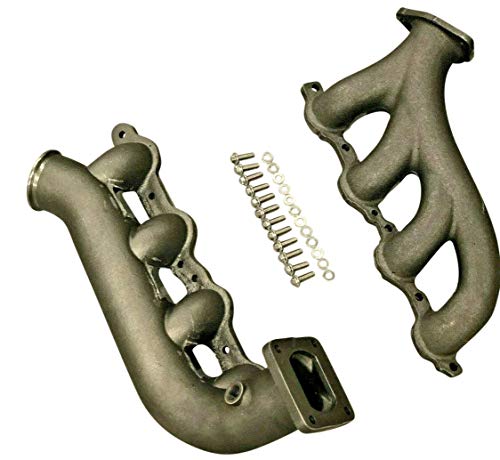
The MMIC/Hotparts T4 turbo exhaust kit provides LSX manifold compatibility designed to support turbocharged V8s in 4.8/5.3/6.0 applications. A key selling point is no need to relocate the alternator, simplifying installation on many stock-configured setups. The kit is marketed as a convenient T4 exhaust solution for LS engines from 1999 to present, aligning well with 5.3-based builds that aim for reliable turbo headers with straightforward fitment.
When evaluating exhaust kits, consider turbo size, manifold porting, and overall exhaust routing in relation to your turbocharger and wastegate. The kit’s fitment claims are attractive for users seeking simpler bolt-on compatibility, but cross-check with your engine year, accessory drives, and turbocharger data to ensure seamless integration.
BTR Rocker Arm Trunion Upgrade Kit

The BTR rocker arm trunion kit is designed to convert stock LS rocker arms into captured roller-bearing units. The upgraded trunions provide smoother rotation and improved stability at higher RPM, which is beneficial in turbocharged applications where cylinder pressure and RPM can push the valvetrain. The kit is described as compatible with a wide range of LS configurations, from stock 4.8s to turbo builds pushing 1,000+ HP.
Important notes include that bolts are not included, and stock bolts can be reused. This keeps costs down while delivering stronger valvetrain reliability in boosted scenarios. When selecting a trunion kit, verify compatibility with your exact rocker arm model and ensure proper torque and retention hardware are used during installation.
BTR Stage 2 Turbo Camshaft Kit (Titanium Retainers)

The Stage 2 camshaft kit from BTR includes a camshaft with durable titanium retainers and 7.400-inch chromoly pushrods, designed for a balanced boost-friendly profile. The cam specs are 226/231 degrees with .610″/.609″ lift and a 113 LSA, targeting a higher RPM range for turbocharged 5.3/6.0 builds. This configuration is well-suited for users seeking additional RPM capability beyond a Stage 1 setup, particularly in lighter cars or turbo combos on 5.3/6.0 engines.
The kit uses a 3-bolt timing gear pattern and is described as a go-to option for enthusiasts aiming to extract more peak power from a turbo system. When selecting a cam in a boosted build, pairing with the correct valve springs and pushrods is essential to maintain durability at elevated RPM and boost levels.
BTR Stage 4 Turbo Camshaft Kit
The Stage 4 kit from BTR is described as the “Big Stick” for turbo cams, designed for high horsepower goals. The cam specs run 234/239 degrees with lift around .612″/.610″ and a 115+5 LSA, accompanied by a 3-bolt timing gear pattern. This profile aims to maximize turbo performance at higher RPM, making it suited for turbocharged configurations where maximum top-end power is the target and the vehicle weight supports high-RPM operation.
As with other turbo cam upgrades, this kit benefits from complementary hardware: stage-appropriate valve springs, titanium retainers, and robust pushrods. It’s best used in builds where the engine can sustain elevated boost and rpm, often in conjunction with a properly matched turbo and fuel system to ensure reliable operation under aggressive tuning.
BTR Stage 2 Turbo Camshaft (Gen III/IV LS)

Michigan Motorsports offers a Stage 2 Turbocharged Camshaft variant aimed at Gen III/IV LS engines ranging from 4.8L to 6.2L. This cam profile is designed to align with turbocharged setups, delivering a solid balance of low-end response and upper-RPM performance. Specs indicate 220/235 degrees of duration with approximately .618″/.618″ lift and a 113 LSA, with a 3-bolt timing gear pattern suitable for common LS platforms.
When selecting this cam, consider the overall turbo system, including lift limits of the valvetrain components and the compatibility with your chosen valve springs and retainers. This option suits builds that prioritize a responsive mid-range and capable top-end power, particularly in lighter 5.3/6.0 chassis where RPM limits are reached earlier in the power band.
Buying Guide
- Engine compatibility: Confirm your LS generation (Gen III/IV), displacement (4.8/5.3/6.0/6.2), and head type before selecting a cam, rockers, or exhaust kit.
- Turbo integration: Match cam grind and valve train upgrades with the chosen turbocharger size, wastegate, and fuel system. Aggressive cams require upgraded springs, pushrods, and possibly larger injectors and a tuned ECU.
- Valvetrain durability: For boosted apps, prioritize trunions, titanium retainers, and robust pushrods to handle higher RPM and boost pressures.
- Relocation and clearance: Accessories relocation brackets can improve header clearance but verify compatibility with your accessory drive setup and belt routing.
- Installation considerations: Some kits assume shop-level installation due to alignment needs, bolt patterns, and precise torque specs. Budget for professional installation if needed.
- Reliability vs. performance: Higher RPM and peak power often come at the cost of daily drivability. Balance cam duration, lift, and supporting hardware to preserve street manners.
- Support and documentation: Choose brands with detailed specs and installation notes. This helps ensure correct pairing with your turbo kit and minimizes trial-and-error.