Best Tyres for Scooters: Top Replacement Wheels and Tubes for Every Ride
Choosing the right tyres or tubes for scooters improves grip, stability, and comfort on urban streets or rough paths. This guide highlights five well-reviewed options that fit a range of popular 8.5″ to 10″ scooter wheels. Each entry covers compatibility, construction, and ideal use cases to help you decide which tyre or inner tube best matches your ride style and scooter model.
| Product | Brand | Key Feature | Type |
|---|---|---|---|
| TOCBEUU Solid Tires 8.5×2 | TOCBEUU | Solid, 50/75-6.1 size, wide compatibility | Tire |
| Cooryda Inner Tube 8.5” x 2″ | Cooryda | Butyl rubber, airless-like puncture resistance | Inner Tube |
| AVOKIN 10×2.75-6.5 Tire | AVOKIN | Thick, heavy-load capable, road-ready | Tire |
| BABEJIA 10×2.50 Tubeless | BABEJIA | Airless look-alike tubeless design | Tire |
| ZAITUO 10″ Tubeless Tire | ZAITUO | 4-ply durability with rugged tread | Tire |
TOCBEUU Solid Tires 8.5×2 for Electric Scooters

These solid tires are designed for scooters using 8.5″ rims and are compatible with several popular models, including Gotrax and Xiaomi variants. They advertise a 50/75-6.1 size and emphasize a tight, solid construction that reduces puncture risk and maintenance. The listing notes a broader compatibility footprint across models and a method to stretch the tire on rims, with inner dimensions slightly smaller to aid mounting and heat-softening during installation.
Key considerations: confirm rim compatibility (6.5–6.65 inch inner diameter and 1.34–1.45 inch slot width), and verify your scooter’s inner width and groove specs. Solid tires generally provide low maintenance and consistent wear but can trade off some ride softness for durability on rough surfaces.
Cooryda 2Pack 8.5 Inches Scooter Inner Tube

These inner tubes use butyl rubber for durability across a wide temperature range, offering a cushion against punctures and road shocks. They are sized for 8.5″ scooters with a 2″ width and a 5.5″ inner diameter, designed to be suitable for both front and rear wheels. The set emphasizes quiet operation, grip, and heat dissipation, helping to maintain stability on varied surfaces. A suitable spare for scooters that use 8.5″ tires, particularly when a traditional pneumatic setup is desired.
Key considerations: inspect the valve type and compatibility with your rim, and ensure the mounting area can accommodate the 5.5″ inner diameter. Butyl tubes are not universal for all tubeless setups, so verify your tire configuration before purchasing.
AVOKIN 10×2.75-6.5 Scooter Tire

AVOKIN offers a 10×2.75-6.5 tire suited for higher-load electric scooters and several models with 6.5″ rims. The tire dimensions indicate a 10″ outer diameter and a 3.2″ width, with a stated maximum load per tire. The description highlights the rubber composition as a factor in flexibility and durability, aimed at cushioning impacts and reducing punctures while distributing stresses more evenly across the tread.
Key considerations: check for rim compatibility (6.5″ inner diameter range and precise groove width), and consider your riding environment. Thicker tires can improve load distribution and grip but may affect weight and rolling resistance.
BABEJIA 2-Pack 10×2.50 Tubeless Scooter Tire

This tubeless-looking option targets 10×2.50 tires for scooters in several model families, including Segway and Gotrax variants. The listing specifies compatible sizing (60/70-6.5 and 10×2.50-6.5) and rim groove width compatibility, helping riders ensure a proper fit. Tubeless-style tires can offer lower maintenance and a smoother ride by reducing air pressure fluctuations, while still needing correct installation to avoid leaks or incorrect seating.
Key considerations: verify rim groove width compatibility and overall diameter with your specific scooter model. Tubeless configurations often require careful mounting and sometimes an inner tube for added security in certain designs.
Cooryda 2 Pack 8.5’” Inner Tube For 8.5 Inch Scooters
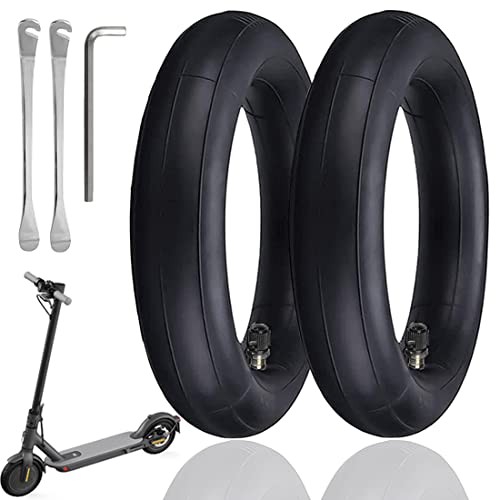
This Cooryda inner-tube set shares the environmental butyl rubber focus with strong heat tolerance and durability. Sized for 8.5″ scooters with a 5.5″ inner diameter, it is presented as a universal front/rear wheel component suitable for several 8.5″ models. The description emphasizes a quiet ride, puncture resistance, and stable operation that contributes to a predictable handling experience across varied road surfaces.
Key considerations: match the inner diameter and valve type to your rim. Ensure your tire is not already setup as tubeless if a tube is required for installation, and consider the tube’s impact on overall rolling resistance and weight.
Buying Guide: Key Purchase Considerations For Scooter Tyres And Tubes
- Rim size and compatibility: Verify the tire’s inner diameter, groove width, and the rim’s seat height to ensure a proper fit. Misfits can lead to poor seating, leaks, or unsafe riding conditions.
- Solid vs. pneumatic: Solid tires and tubeless-looking options reduce puncture risk and maintenance, but can affect ride comfort and traction on rough surfaces. Pneumatic tires offer better shock absorption but require more maintenance.
- Riding environment: Consider typical surfaces (city streets, bike lanes, or off-road paths). A higher-tread or more robust compound improves grip on wet or uneven terrain.
- Load and speed: Check maximum load per tire and the scooter’s weight distribution. Heavier riders or gear may benefit from thicker sidewalls and higher ply ratings.
- Installation and mounting: Some tires are designed for easier installation with heat-softening features, while others require careful stretching or inner-tube assembly. Follow manufacturer guidelines to avoid damage.
- Maintenance expectations: Tubes require periodic checks for leaks and valve integrity, while tubeless setups demand attention to bead seating and sealant if used.
- Availability and compatibility: Ensure you can source replacements with the correct size and model compatibility for your specific scooter brand and version.
- Cost vs. longevity: Durable components may have a higher upfront cost but reduce replacement frequency and maintenance time.