Best Universal Car Diagnostic Scanner for Quick Troubleshooting
Finding a reliable universal car diagnostic scanner helps drivers quickly identify why a check engine light is on and what to fix. This guide highlights five versatile OBD II/CAN scan tools popular in American garages and homes. Each picks up emissions data, live sensor readings, and trouble codes across common vehicle makes from 1996 onward. The selections focus on accuracy, ease of use, and broad protocol support to cover most cars in the U.S. market.
| Product | Brand | Key Strength |
|---|---|---|
| ANCEL AD310 Classic Enhanced Universal OBD II Scanner | ANCEL | Fast codes; compact design |
| MOTOPOWER MP69033 Car OBD2 Scanner | MOTOPOWER | Wide protocol support; affordable |
| FOXWELL NT604 Elite | FOXWELL | 5-in-1, ABS/SRS & live data |
| Motivora Professional Universal OBD2 Scanner | Motivora | 50,000+ DTC library |
| Autel MS309 Universal OBD2 Scanner | Autel | Out-of-box use; reliable basics |
Below are five products chosen for broad compatibility, trustworthy data, and practical features for everyday car owners and DIYers.
ANCEL AD310 Review
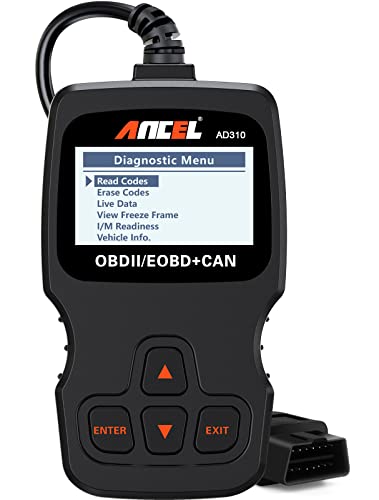
The ANCEL AD310 Classic Enhanced Universal OBD II Scanner is one of the market’s best-selling tools. It reads and clears emission codes, displays live data, and provides freeze-frame information. The device supports 1996 and newer OBD2 protocol vehicles and works directly from the vehicle’s data link connector, with no external power source required. Its compact, sturdy build reduces the risk of damage during use, and the device ships with clearly labeled controls for quick operation. This scanner is well-suited for diagnosing common engine and emission issues efficiently.
Key features include: CEL diagnostic capabilities, live data, I/M readiness, and memory data access. It is designed for speed and simplicity, enabling both novices and seasoned mechanics to identify fault causes and confirm repairs rapidly.
MOTOPOWER MP69033 Essentials

The MOTOPOWER MP69033 Car OBD2 Scanner is built for broad compatibility with 1996 and newer vehicles. It offers a multi-function interface that reads and erases codes, shows real-time data, and presents vehicle information. The tool supports nine protocols and multiple languages, including English and several European languages. A compact 2.8-inch LCD display provides clear visibility, and the scanner pulls power directly from the vehicle, requiring no separate battery or charger. It’s a practical option for drivers who want a straightforward diagnostic experience and quick insight into engine conditions.
FOXWELL NT604 Elite Overview

The FOXWELL NT604 Elite is a 5-in-1 diagnostic tool designed for car owners who want to scan engine, ABS, SRS, and transmission systems. The 2026 version ships ready to use out of the box, with up-to-date software and a user-friendly interface. It helps identify root causes and can clear codes once repairs are completed. While very capable, it notes that airbag data can sometimes be non-cleared after certain events. This model emphasizes accessibility and reliability for routine maintenance and pre-purchase inspections.
Motivora Universal OBD2 Scanner V600
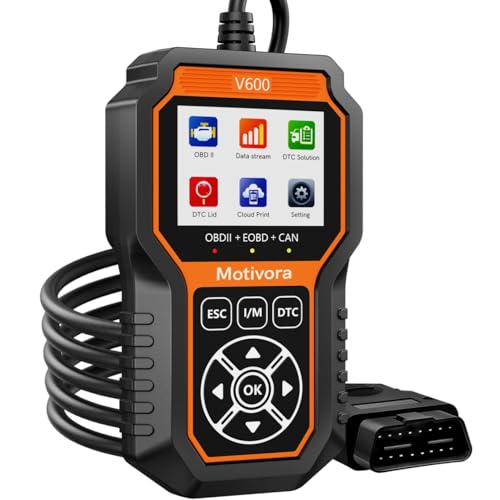
The Motivora Professional Universal OBD2 Scanner features an upgraded database with over 50,000 DTC lookups and a one-click I/M readiness function. It provides precise live data streams and supports both reading and clearing fault codes. It’s positioned for home repairs and shop use, delivering practical diagnostics for common engine issues. Note that some advanced ABS/SRS or maintenance functions may not be supported depending on vehicle make and model.
ANCEL AD530 Upgrade

The ANCEL AD530 OBD2 Scanner builds on the AD310 with broader OBD II capabilities and added features such as battery voltage monitoring. It carries a large DTC library and provides live data streams, freeze frame, and MIL status checks. It is designed for everyday use by car owners who want a more proactive approach to vehicle health. The AD530 emphasizes ease of use and quick access to code definitions, enabling informed decisions about when to seek professional service. It is compatible with most gasoline vehicles since 1996, with caveats about non-supported systems like ABS or transmission in some models.
Buying Guide: Key Purchase Considerations
- Vehicle compatibility: Ensure the scanner supports your vehicle year, make, and model, including the required OBD II protocols. Most American cars from 1996 onward use OBD II/CAN, but some features may be vehicle-specific.
- Protocols and languages: Look for devices that support multiple protocols (OBD II, CAN, etc.) and offer multilingual support if needed for family use or professional shops.
- Functionality: Consider whether you need basic code reading/clearing, I/M readiness, live data streaming, freeze-frame, or advanced features like ABS/SRS scanning. Some tools clearly state what they do not support, such as TPMS or certain maintenance functions; verify against your needs.
- Data presentation: A clear display and intuitive navigation help with quick interpretations. Some scanners provide graphical live data or color-coded results, which can aid understanding for DIY repairs.
- Power requirements: Most plug directly into the OBD II port, drawing power from the vehicle. Portable, battery-free operation is common, but ensure compatibility if you plan to use the tool across multiple vehicles.
- Data library size: A larger built-in code database reduces the need to search online. This is particularly helpful for owners who work on multiple vehicles or older models with less common codes.
- User experience: Out-of-the-box usability, clear instructions, and responsive customer support add value, especially for first-time users. Some models offer quick-access buttons and one-click I/M readiness checks.
- Limitations and exclusions: Some tools do not clear certain codes or support all systems (ABS, SRS, transmission). Review the product notes to ensure it meets your specific needs.
- Future-proofing: If you want to stay current as vehicles evolve, choose scanners with regular software updates and a robust DTC library to cover newer models.
- Budget and application: For casual home use, a compact, easy-to-use scanner with essential features is usually sufficient. For DIYers or shop use, a tool with a larger database, more live data options, and extended compatibility may be worth the investment.