Best Valve Cleaners for Direct Injection Engines
Direct injection (DI) engines are prone to carbon buildup on intake valves, turbochargers, and combustion chambers due to their precise fuel delivery. The right cleaner can help dissolve deposits, improve throttle response, and restore performance without harming sensitive DI components. This guide highlights top valve and intake cleaners designed for GDI and direct-injection systems, offering objective insights into effectiveness, safety, and compatibility with modern engines.
Summary of chosen products
| Product | Brand | Key Benefit | Engine Focus | Approx. Weight/Size |
|---|---|---|---|---|
| CRC GDI IVD Intake Valve & Turbo Cleaner | CRC | High-concentration PEA detergency for GDI and turbo systems | GDI, Turbocharged | Liquid (size listed on product page) |
| Gumout 540028 Foaming Intake Valve & Turbo Cleaner | Gumout | Deep, clingy foam for carbon deposits | GDI, Turbocharged | 11 oz |
| LIQUI MOLY DIJectron Cleaner | Liqui Moly | Excellent cleanliness, wear protection | GDI, general injection systems | Liquid (bottle size varies) |
| Berryman 2611 Intake Valve & Combustion Chamber Cleaner | Berryman | PEA-based formula for carbon dissolution | Gasoline engines with DI and non-DI | 16 oz aerosol |
| STP Direct Injection Fuel Injector Cleaner | STP | Detergency to dissolve deposits and improve fuel system cleanliness | Direct injection and conventional injectors | 12 oz |
CRC GDI IVD Intake Valve & Turbo Cleaner

CRC’s GDI IVD cleaner targets modern direct-injection engines by delivering a high concentration of detergents designed to dissolve carbon on intake valves and turbo components. The product is described as easily installed through the air intake system, minimizing downtime and technician effort. Its formulation emphasizes PEA-based detergency, known for dissolving heavy carbon buildup without harming gaskets or seals when used as directed. For DI engines, the cleaner aims to restore smoother idle, improved throttle response, and better overall engine efficiency.
Gumout 540028 Foaming Intake Valve & Turbo Cleaner

Gumout’s foaming cleaner uses a powerful foaming formula designed to cling to interior surfaces in the intake manifold, valves, and combustion chamber. The deep-penetrating foam helps loosen carbon deposits that can accumulate in GDI and turbocharged engines, with the goal of restoring throttle response and engine efficiency. The 11-ounce format makes it suitable for service bays and DIY use, while its formulation is marketed as safe for turbocharged and GDI systems when used as directed.
LIQUI MOLY DIJectron Cleaner

Liqui Moly’s DIJectron is designed to keep gasoline direct injection systems clean, focusing on overall engine cleanliness and wear protection. While it emphasizes cleaning performance, it is also positioned as a preventative measure for vehicles with DI injectors. This additive is commonly used for routine maintenance to reduce carbon buildup and support smoother combustion, especially in engines experiencing minor hesitation or rough idle. The product line is well-regarded for maintaining consistent combustion and cleaner fuel systems.
Berryman 2611 Intake Valve & Combustion Chamber Cleaner
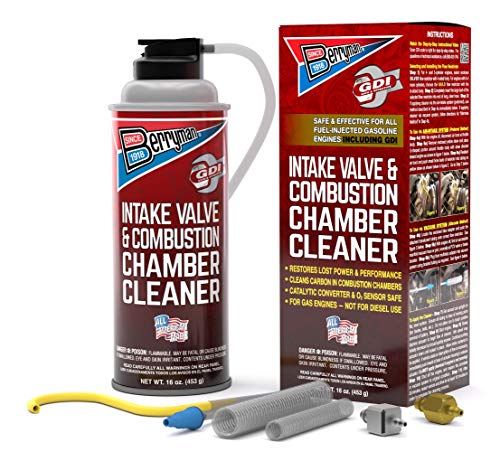
Berryman 2611 is a versatile cleaner formulated to dissolve carbon buildup in both intake valves and combustion chambers across a broad range of fuel-injected gasoline engines, including GDI. The formula includes polyetheramine to help dissolve tough deposits, with an emphasis on being suitable for use in engines using various fuel delivery configurations. The 16-ounce aerosol can provides ample coverage for typical service applications and repeated uses in workshops or garages.
STP Direct Injection Fuel Injector Cleaner

STP Direct Injection Fuel Injector Cleaner is formulated to dissolve hardened deposits that accumulate on injectors and within the fuel system. The 12-ounce bottle includes detergents designed to improve fuel system cleanliness and performance. By addressing deposits in direct injection systems, the cleaner aims to sustain smoother operation, better throttle response, and potentially improved fuel economy. It can be used as part of routine maintenance or during a dedicated cleaning service.
Buying Guide: Key Considerations for Valve Cleaners in Direct Injection Engines
Choosing the right cleaner for a direct injection engine involves evaluating deposit type, engine configuration, and service goals. Consider these perspectives to make an informed choice:
- Target deposits: DI engines commonly accumulate carbon on intake valves and combustion chambers. Look for cleaners that emphasize carbon-dissolving detergents such as polyetheramine (PEA) and robust solvency in the presence of turbochargers and GDI components.
- Detergency chemistry: PEA-based formulations are widely used for valve and intake cleaning. Some products emphasize foaming action or cling properties to reach interior surfaces more effectively; others focus on rapid dissolution of stubborn deposits in the combustion chamber.
- Engine compatibility: Verify that the cleaner is safe for turbocharged and high-pressure DI systems. Some products are specifically marketed for GDI and DI engines, while others are multi-application but still suitable for DI use.
- Delivery method: Cleaners are sold as liquids, foaming sprays, or aerosols. Foaming formulas work well for interior manifolds, while liquids can be added to the fuel or introduced through intake routing, depending on the product instructions.
- Usage context: Choose between DIY preventive maintenance and professional service. Some cleaners are designed for at-home use during an oil change interval, while others are intended for workshop-level treatments with controlled intake exposure.
- Vehicle impact and safety: Always follow manufacturer directions, including any prerequisites such as fuel level, engine temperature, and compatibility with aftermarket hardware. Overuse or incorrect application can potentially affect seals or sensors.
- Performance outcomes: Expect improvements in throttle response, smoother idle, and more consistent idle quality as indicators of cleaner intake valves and combustion chambers. Real-world results vary by vehicle condition and driving style.
- Packaging and dosing: Consider bottle size, spray volume, and dosing instructions. Smaller bottles may be suitable for occasional maintenance, while larger formats support frequent use in service scenarios.
In evaluating options, it is helpful to balance cleaning intensity with engine sensitivity. For vehicles with pronounced carbon buildup or turbocharged DI systems, choosing products explicitly marketed for GDI or DI engines may yield the most consistent results. Always verify compatibility with your vehicle’s manufacturer recommendations and consult a professional if you are unsure about the cleaning method.