Best Wheelchair Hoist for Car: Safe, Portable Lifts to Ease Transfers
Choosing a wheelchair hoist for a car involves evaluating portability, weight capacity, ease of use, and compatibility with different mobility aids. This guide highlights five top options designed to help caregivers and wheelchair users transfer safely into vehicles. Each product section below provides key features, usage notes, and practical considerations to help you compare quickly and find the right fit for your needs.
Summary Table Of Selected Products
| Product | Brand | Key Benefit | Approx. Weight Capacity |
|---|---|---|---|
| Culver Portable Lift for Electric Wheelchairs | CULVER LED PROFESSIONAL LED LIGHTING SOLUTIONS | Lightweight, foldable lift with solid power for car entries | 110 lbs |
| Upgrade Patient Lift for Home | Nolene | Adjustable height and robust transfer support for caregivers | Up to 280 lbs (safety dependent) |
| Achairgo Patient Lift Transfer Chair | Achairgo | One-device solution for quick car transfers | Various load handling features (user dependent) |
| Vive Hydraulic Patient Lift | Vive | Hydraulic system offers smooth operation without power | Up to 400 lbs |
| LCDOCTOR Patient Lift Transfer Chair | LCDOCTOR | Versatile cushions and easy height adjustment | Weight support details vary by model |
All five options focus on portability, ease of use, and safety in car transfers. Review the sections below to compare design approaches, typical setup steps, and the practical trade-offs between electric-powered versus hydraulic transfer systems.
Culver Portable Lift For Electric Wheelchairs
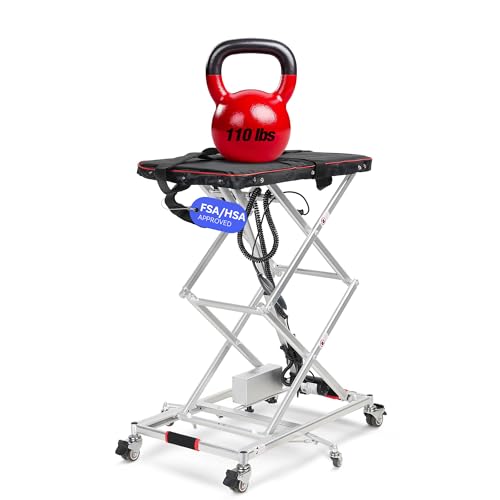
The Culver portable lift emphasizes a lightweight and foldable design, facilitating storage and transport for electric wheelchairs or mobility scooters. With a claimed 25 lb weight and a 110 lb lifting capacity powered by a 4000N motor, this unit aims to be a compact yet capable option for car loading. Its operation relies on simple up/down motions after securing the caster brakes and fastening the safety belt. This configuration positions the Culver lift as a practical carry-along tool for everyday mobility needs, potentially replacing bulkier ramps or larger hoists in some scenarios.
Key features include a foldable frame for trunk or backseat storage and a focus on compatibility with most wheelchairs. The device is described as a “freedom facilitator,” designed to travel with the user for on-the-go transfers. The top-lift action is controlled via straightforward controls, and the belt system adds a layer of safety during the lift. Prospects should verify wheel chair compatibility and ensure proper belt tension before use to maximize stability during loading and unloading.
Usage considerations: verify vehicle clearance and trunk dimensions, practice with a mock transfer, and confirm belt adjustment to fit securely. While the unit is lightweight, users should adhere to weight and usage guidelines to avoid overextending the motor or compromising balance during operation.
Upgrade Patient Lift For Home

The Nolene upgrade patient lift focuses on adjustable height and base width to address diverse transfer environments. With a height range roughly from 69 to 84 inches and a base width between 23 and 35 inches, this system is designed for flexible setups during patient transfers in homes or vehicles. The included seat cushion is described as firm and skin-friendly, with four support straps that help distribute weight and enable adjustable seat height. The unit also offers a sturdier suspension device for enhanced safety during standing, sitting, and rehabilitation tasks, though proper caregiver presence is emphasized during use.
Considerations include ensuring room to maneuver in the vehicle and doorways, confirming that the base width fits between vehicle seats or in a trunk, and tightening safety belts for a secure transfer. The product’s design can support versatile use, from bedside commodes to car transfers, but like any caregiver assist device, it requires caregiver supervision and proper patient positioning for safe operation.
Achairgo Patient Lift Transfer Chair

The Acheirgo lift is marketed as a portable folding transfer chair suitable for car use, intended to ease transfers for seniors, adults, and disabled individuals. It emphasizes one-button electric lifting with adjustable width to accommodate different transfer scenarios, including beds, wheelchairs, cars, couches, or recliners. The design highlights a compact folded size that can fit in most car trunks, supporting convenient travel. The product page notes a three-year guarantee eligibility, underscoring a focus on product reliability and caregiver convenience.
Key considerations include the range of lifting height (approximately 33.86 to 47.64 inches) and the adjustable base width (roughly 19.68 to 33.46 inches). These dimensions help address varied body heights and seating configurations. Potential limitations to confirm include weight capacity and the ease of operation in tight spaces, as well as ensuring that the lift’s weight distribution remains stable during loading and unloading. Proper setup and a cautious transfer plan are essential for safe use.
Vive Hydraulic Patient Lift

The Vive hydraulic lift adopts a non-electrical approach, relying on a heavy-duty hydraulic pump for smooth operation. This design can be a cost-effective alternative to full electric systems while still enabling secure patient transfers from wheelchairs, beds, and bathrooms. The lift supports up to 400 pounds and includes a mesh sling with multiple handles for better patient positioning and comfort during transfers. For caregivers seeking a lower-maintenance option without battery concerns, the Vive hydraulic model offers a clear option.
Important considerations include the manual effort required to operate the hydraulic system, the need for sling compatibility with the patient’s size, and ensuring the device can be maneuvered into the car space without obstruction. Since hydraulic systems depend on clinician or caregiver input to lift and lower, practice and careful attention to patient comfort are advised to prevent accidental slips or strains during the transfer.
LCDOCTOR Patient Lift Transfer Chair

The LCDOCTOR transfer chair emphasizes versatility with adjustable height features and two interchangeable cushions—one for everyday comfort and a toilet-opening cushion for bedside use. The chair is designed to ease caregiver strain with a simple crank mechanism for height adjustments, ergonomic armrests, and non-slip foot pads to enhance stability. A detachable cushion simplifies cleaning, which is beneficial for home care settings. The unit targets efficient transfers between surfaces, including beds, chairs, cars, and couches, while reducing manual lifting requirements.
When evaluating LCDOCTOR, consider cushion preference, ease of cleaning, and how the transfer chair integrates with the car’s interior space. Ensure that the chair can fit through doorways and between seats, and verify that the patient’s transfer needs align with the chair’s height range and weight support capabilities. Safety remains paramount, so caregiver presence and proper belt use are critical to successful transfers.
Buying Guide: Key Purchase Considerations
Multiple factors influence the choice of a wheelchair hoist for car transfers. The following considerations help compare options across electric lifts, hydraulic systems, and foldable designs:
- Weight capacity and patient size: Confirm the maximum load and how it aligns with the user’s weight and mobility needs.
- Portability: Look for foldable frames, compact storage, and easy trunk or back-seat placement for travel-oriented use.
- Power source: Electric lifts provide automated operation; hydraulic lifts require manual effort but often cost less and require less maintenance.
- Ease of use: Consider control simplicity, belt security, and how intuitive the setup is for caregivers or family members.
- Compatibility with mobility aids: Ensure the device works with the specific wheelchair, walker, or scooter used in daily life.
- Safety features: Check belts, slings, anti-slip surfaces, and locking mechanisms to minimize movement during transfers.
- Maintenance and cleaning: Removable cushions and washable slings simplify daily care and long-term hygiene.
- Space and interior fit: Measure vehicle interior dimensions to verify the device fits through doors, into seats, and in storage areas.
- Warranty and service: A longer warranty and accessible customer support improve long-term value and confidence.
Trade-offs exist between electric and hydraulic options. Electric lifts provide effortless operation and precise control but may require more maintenance, batteries, and charging. Hydraulic lifts offer reliability without power needs but demand physical effort and may be slower. For daily travel needs, a compact foldable unit may win on portability, while a higher-capacity lift may be necessary for heavier users or institutional settings. Always test a device for fit, balance, and control before relying on it for essential transfers.
Safety note: caregivers should be trained in proper transfer techniques and adhere to weight limits and usage guidelines. Regular inspection of slings, belts, and joints reduces the risk of failure during a transfer and protects both the patient and caregiver.