Best Head Gasket Sealers for Quick, Permanent Repairs
When a blown head gasket or a cracked head threatens engine reliability, a head gasket sealer can offer a fast, low-cost repair option. This article reviews five prominent sealers, highlighting ease of use, sealing power, and compatibility with various engines. Use this guide to compare options and choose the right product for a DIY repair or shop-grade fix.
| Product | Brand | Key Benefit |
|---|---|---|
| BlueDevil Head Gasket Sealer | BlueDevil Products | Permanent seal for blown gaskets and compatible with gasoline and diesel engines |
| HG-1 Head Seal | Bar’s Leaks | Seals warped/cracked heads and blocks; antifreeze compatible; no draining required |
| K-Seal ST3501 | K-Seal | Permanent repair with ceramic micro-fibres; works for 0.64 mm leaks; easy to use |
| Steel Seal Blow Head Gasket Fix | STEEL SEAL | Permanently seals cracks; DIY pour-in; widely used by repair shops |
| K&W FiberLock Head Gasket & Block Repair | K & W | Permanent fix with nanotechnology; easy pour-in use; reduces system loss |
Note: This summary table highlights each product’s core strength to help you compare at a glance. The detailed sections below provide specifications, usage notes, and considerations for different engine types.
BlueDevil Head Gasket Sealer

The BlueDevil Head Gasket Sealer is designed for ease of use and quick application. It forms a permanent seal for leaks in blown head gaskets, warped or cracked heads, heater cores, and freeze plugs. It is compatible with all types of engines, including gasoline and diesel, making it a versatile option for many vehicles. The product aims to deliver a one-shot repair, minimizing downtime for DIY and professional environments.
Bar’s Leaks HG-1 Head Seal

Bar’s Leaks HG-1 offers a fast solution for blown head gasket leaks, with sealing capabilities for warped or cracked heads and blocks. It is antifreeze compatible and requires no drainage or thermostat removal. The product is designed to work with a wide range of coolant types and avoids the need for extensive engine disassembly, appealing to both DIYers and professionals dealing with coolant-related gasket issues.
K-Seal ST3501 Pour and Go Head Gasket Sealer
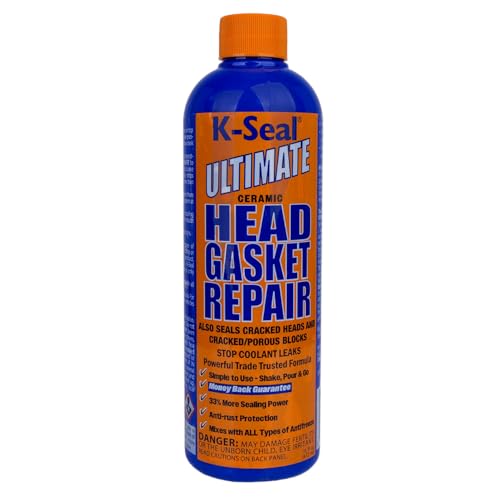
K-Seal ST3501 is a popular permanent repair option featuring a formula with ceramic micro-fibres. It seals leaks up to 0.64 mm and requires no draining or flushing—just shake, pour, and run the engine. For larger engines, multiple bottles may be recommended, and the product emphasizes a long-lasting fix with minimal engine disturbance.
Steel Seal Blown Head Gasket Fix (8 Cylinder)

Steel Seal’s blown head gasket fix uses a do-it-yourself pour-in approach that is widely used in repair shops. The product aims to permanently seal cracks and leaks, providing a cost-effective alternative to full head gasket replacement. It emphasizes compatibility with standard cooling systems and quick application for faster repairs.
Steel Seal Blown Head Gasket Fix (6 Cylinder)
This Steel Seal variant targets 6-cylinder engines with a similar approach to sealing leaks permanently. Like other Steel Seal products, it is designed for DIY use and may reduce downtime when replacing a gasket. It highlights a robust sealing formula intended to withstand engine temperatures and pressures after curing.
Bar’s Leaks Block Seal Head Gasket Fix
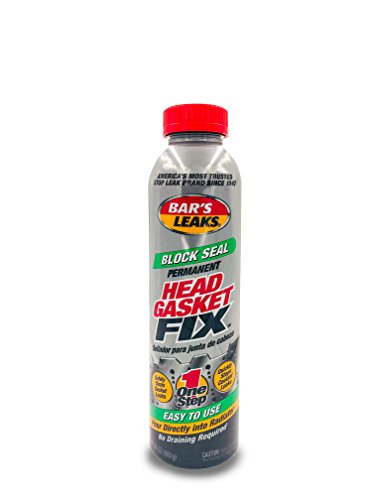
Bar’s Leaks Block Seal combines antifreeze-compatible sealing liquid with gasket sealing particles. It penetrates gaps and hardens to stop leaks permanently. The one-step formula is designed for aluminum and cast iron heads and blocks, with no draining required in many cases. This makes it a practical option for vehicles with complex cooling systems.
K&W FiberLock Head Gasket & Block Repair
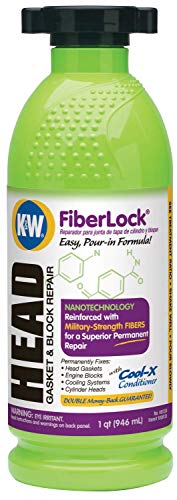
K & W FiberLock uses nanotechnology and military-strength fibers to permanently fix leaks. The easy pour-in formula aims to repair larger holes with minimal fluid loss. It is designed to circulate through the cooling system and can lower operating temperature while sealing. The product emphasizes a strong, multi-layer repair approach for persistent leaks.
Buying Guide: Key Purchase Considerations
- Engine type and compatibility: Check whether the sealer works with gasoline, diesel, and the specific engine materials (aluminum vs. cast iron).
- Leak size and location: Some formulas seal small cracks and pinhole leaks, while others claim to repair larger holes up to a certain diameter.
- Drainage and flushing: Some products require no draining or thermostat removal, while others may benefit from minimal initial preparation.
- Temperature and pressure tolerance: Look for consolidated claims about engine operating temperatures and sealing under high heat.
- Number of bottles required: For larger engines, multiple bottles may be necessary; ensure you have enough product for the cooling circuit.
- Compatibility with antifreeze types: If you use particular coolant formulations, verify compatibility to avoid chemical reactions or reduced sealing.
- Long-term durability: Consider whether the sealer offers a permanent fix or a temporary stop-gap, and whether a professional inspection is advised afterward.
- Application process: Assess ease of use, whether shaking, pouring, and running the engine suffices, and if any special tools are needed.
- Warranty and user reviews: Review product warranties and user feedback for real-world effectiveness and potential downsides.
- Post-repair monitoring: Plan for pressure tests, coolant checks, and a follow-up inspection to confirm the seal holds over time.
Overall, selecting the best head gasket sealer requires aligning engine type, leak severity, and ease of use with the product’s sealing technology. Users should follow each product’s instructions precisely and consider a professional assessment if the leak is severe or if the engine exhibits overheating or loss of coolant after treatment.