Best Battery for Power Inverter: Top Inverter-Power Solutions You Can Trust
Choosing the right battery-powered inverter setup is essential for reliable portable power. The following selections focus on inverters that run off common 18V/20V battery packs and 12V vehicle systems, offering multiple charging ports and USB-C fast charging. Each product below highlights compatibility, output, and practical uses for outdoor trips, work sites, or emergency backup.
| Product | Battery Compatibility | Output (W) | Key Ports |
|---|---|---|---|
| Azocek 220W Power Inverter (DeWalt 20V) | DeWalt 20V | 220 | 1 AC, 2 USB QC, 1 USB-C PD |
| TWING Car 1000W Inverter | 12V vehicle battery | 1000 | 2 AC outlets, QC 3.0 USB, PD 3.0 Type-C |
| Azocek 220W (Milwaukee 18V) | Milwaukee 18V | 220 | 1 AC, 2 USB QC, 1 USB-C PD |
| Real 200W (DeWalt 20V) | DeWalt 20V | 200 | 2 USB, 1 USB-C, 1 AC |
| PlantPalGear 220W (Dewalt 20V) | DeWalt 18V/20V | 220 | 1 AC, 2 USB QC, 1 USB-C PD |
Note: Battery not included in all listings. Always check compatibility with your exact battery model before purchase. The products below are organized to help you compare output, charging options, and portability for on-the-go power needs.
Azocek 220W Inverter for DeWalt 20V Battery

This inverter is designed to run on DeWalt 18V/20V batteries, including models like DCB206, DCB205, and DCB204. It provides portable power for charging phones, laptops, and other small electronics, making it a practical choice for outdoor use or emergency supplies. The 220W DC to AC conversion supports 110V-120V output. It includes one AC outlet, two USB ports (18W QC), and a 30W USB-C PD port to support multiple devices simultaneously.
TWING Car 1000W Inverter for Vehicles

Designed for 12V vehicle power, this inverter delivers up to 1000 watts of continuous DC to AC power with dual 110V outlets. It also includes two USB ports (QC 3.0 and PD 3.0) and supports fast charging for laptops, tablets, and other USB-powered devices. A digital display and smart protections help monitor voltage and prevent overloads, making it suitable for camping, long road trips, and as a backup power source in a vehicle.
Azocek 220W Inverter for Milwaukee 18V Battery
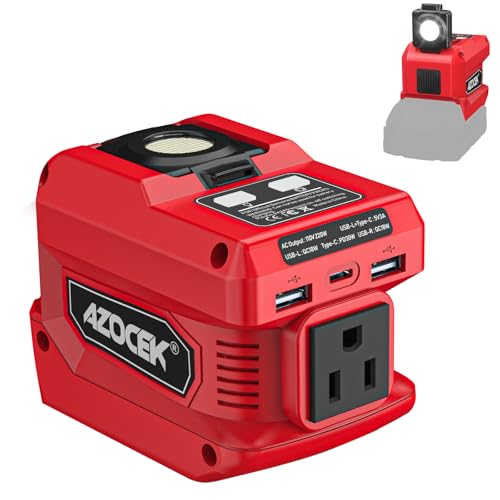
This model is compatible with Milwaukee 18V batteries (e.g., 48-11-1815, 48-11-1850, 48-11-1820). It converts 18V DC to 110V-120V AC, ideal for powering small devices during outdoor activities or power outages. It provides a single AC outlet plus two USB ports and a USB-C PD port for simultaneous charging of multiple devices, similar in form to the DeWalt-focused option above.
Real 200W Inverter for DeWalt 20V Battery

Compatible with a wide range of DeWalt 20V max batteries (DCB206, DCB205, DCB204, DCB181, DCB182, DCB200, DCB203, DCB205-2, DCB204-2, DCB206-2, and more), this inverter serves as a portable power station solution. It provides 200W continuous output with a peak around 250W, and includes two USB ports plus a USB-C for fast charging. It is particularly suited for emergencies or travel where DeWalt batteries are already part of your kit.
PlantPalGear 220W Inverter for Dewalt 20V Battery

Specifically built for Dewalt 18V/20V batteries, this inverter converts 18V DC to 110V-120V AC with a 220W rated output. It features one AC outlet and a multifunction USB setup (two USB QC ports and one USB-C PD port) to charge multiple devices simultaneously. It is a practical option for outdoor work, camping, or backup power with a familiar DeWalt battery ecosystem.
Buying Guide
- Battery compatibility: Ensure the inverter supports your battery platform (DeWalt, Milwaukee, Ryobi, etc.). Verify model numbers to avoid incompatibility or power issues.
- Output needs: Match wattage to your devices. Inverters around 200–220W are suitable for phones, tablets, small laptops, and cameras; higher-watt units (like 1000W) support larger devices but are larger and heavier.
- Ports and charging: Look for a mix of USB-A, USB-C PD, and at least one AC outlet. USB-C PD enables faster charging for modern devices.
- Portability vs. protection: If you need frequent transport, prioritize compact designs and built-in protections, such as overload, undervoltage, and overheat safeguards.
- Battery availability: In outdoor or emergency setups, having compatible spare batteries helps ensure longer operation without recharging. Consider a kit that aligns with the batteries you already own.
- Usage scenario: Vehicle inverters suit on-the-go power; 110V AC inverters from batteries fit camping or job sites; ensure the inverter’s peak power handles surge requirements for devices with startup spikes.
- Safety considerations: Use in ventilated areas, avoid exposing units to moisture, and follow manufacturer guidelines for use with power tools and electronics.