Best Data Logger for Car: Top Picks for Speed, Precision, and Analysis
Finding the right data logger for automotive use means balancing speed, accuracy, and data depth. The following selections focus on in-vehicle performance, drag and lap metrics, and reliable data export for post‑session analysis. Each option is designed to deliver clear insights whether you’re competing on a track, tuning a race car, or documenting RC vehicle performance.
Summary of chosen products:
| Product | Core Benefit | Key Feature |
|---|---|---|
| RaceBox 10Hz GPS | Professional drag meter and lap timer | Real-time lap data and 0-60/0-130 metrics |
| SKYRC GNSS Performance Analyzer | RC-specific speed tracking with dual GPS/GLONASS | 1M memory and long operation time |
| Racepak 610-KT-SPRTMN | Multi‑channel data logging for comprehensive analysis | 25 channels, up to 100 fps |
| HOBO MX1101 | Temperature and humidity logging for workshop/garage use | Bluetooth, IP50, 1‑2 year battery life |
| Elitech RC‑51 | Reusable temperature data logging with USB export | Up to 32,000 points, -22℉ to 158℉ |
RaceBox 10Hz GPS Performance Meter

The RaceBox unit is designed for automotive performance measurement with a focus on drag and lap data. It provides real-time lap timing, 0-60 mph and 60-130 mph performance, and 1/4 mile analysis. The device supports multiple data streams for a comprehensive picture of vehicle behavior across sessions, making it suitable for track enthusiasts and competitive racers seeking repeatable results. The accompanying mobile app enables quick session review and data export for detailed breakdowns.
SKYRC GNSS Performance Analyzer RC

The SKYRC GNSS Performance Analyzer blends dual GPS and GLONASS for confident top-speed validation in RC cars and planes. It emphasizes precision performance tracking and continuous data capture with a 1 MB memory, ensuring that long sessions are logged without gaps. A built-in LiPo battery supports up to five hours of operation, reducing the need for frequent recharges during long takes or sessions. Ideal for performance-minded RC pilots and competitors who demand reliable speed records.
Racepak 610-KT-SPRTMN SPORTSMAN DATA LOGGER

The Racepak Sportsman data logger is built for multi‑channel capture with robust expandability. It supports 25 total channels, including internal and external sensors, as well as 6 V‑Net expansion for adding more sensors. At a high sample rate of up to 100 frames per second, it captures every relevant parameter for in‑depth analysis. The included SD card streamlines quick data transfer to a computer for post‑session tuning and verification of vehicle performance under racing conditions.
Landtek 4-Channel Data Logger Thermometer

The Landtek four‑channel thermocouple data logger provides multi‑type (K, J, T) measurement with up to 5000 programmable logging points. It supports USB export for easy PC data handling and offers wide temperature ranges to monitor engine bays, exhausts, and ambient conditions. While not a dedicated vehicle telemetry unit, its multi‑channel capability is useful for lab testing, environmental monitoring around cars, and controlled experiments where temperature profiling is essential for reliability and safety analyses.
Elitech GSP-6G-TDE Bluetooth Data Logger
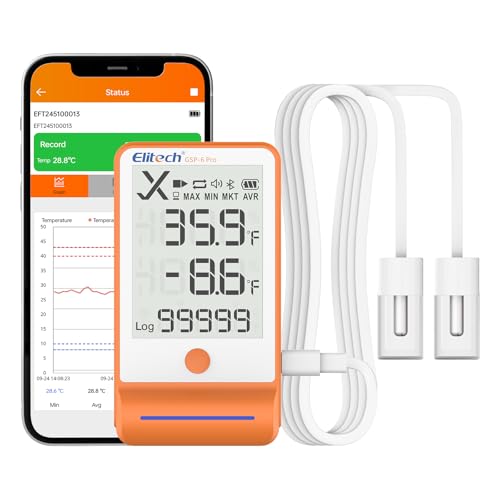
The Elitech GSP‑6G‑TDE adds Bluetooth connectivity to a high‑capacity temperature data logger, enabling parameter settings and data export via a mobile app. With a large data capacity (up to 100,000 data points) and an FDA‑aligned certificate approach for pharmacies and vaccine storage, it suits workshop environments or transport scenarios where precise temperature control is critical. The device provides a broad measurement range and a user‑friendly interface for quick checks during field testing or garage operations.
Buying Guide: Key Purchase Considerations
When selecting a data logger for car work, consider these dimensions to match your use case and budget:
- Data channels and sampling rate: For track testing, higher fps and multiple channels enable richer analysis (e.g., Racepak 610‑KT‑SPRTMN). If you mainly track speed and basic telemetry, a 1–4 channel device with fast sampling may suffice (e.g., RaceBox).
- GPS and sensor fusion: Dual GNSS (GPS + GLONASS) improves accuracy in varied environments. The SKYRC GNSS unit emphasizes this advantage for RC precision but translates to any fast‑moving vehicle context.
- Memory and data export: Look for devices with sufficient onboard memory and straightforward USB/SD export. Etched in the product details is the ability to export to PC for analysis (Racepak, Landtek, Elitech options).
- Battery life and portability: In‑session reliability matters. Long‑life LiPo or integrated batteries (up to several hours) prevent mid‑session power loss (SKYRC and RaceBox examples).
- Environment and temperature logging: If monitoring engine bay conditions, consider devices offering temperature channels or high‑temperature tolerance (Elitech, Landtek in temperature domains).
- Software and analysis ecosystem: Some devices pair with mobile apps or PC software for real‑time analysis, lap timing, and data visualization. A robust ecosystem makes data actionable post‑session.
- Durability and form factor: For RC use or track days, ensure the logger can handle vibration, impact, and weather exposure. Rigid housings and compact footprints help integration into a vehicle or RC setup.
- Cost and expandability: Balance initial price against future sensor expansion, add‑ons, and compatibility with additional channels or nets (e.g., 6 V‑Net expansion on Racepak).
In practice, choose a model that aligns with your primary goal—lap timing and drag metrics for the track, multi‑channel data capture for performance tuning, or environmental logging for safety and reliability testing. Consider starting with a core data logger for speed and acceleration, then add sensors or modules as your testing needs grow.