Best Wheelchair Trailer for Car: Safe, Reliable Hitch Carriers for Mobility
Finding a dependable wheelchair trailer carrier for your vehicle involves evaluating load capacity, hitch compatibility, ease of loading, and safety features. The right carrier helps you transport mobility equipment with minimal effort and maximum security. This guide highlights top options, compares their strengths, and provides clear buying considerations to help you choose confidently.
Summary of chosen products
| Product | Brand | Capacity | Hitch Size | Ramp Type | Notes |
|---|---|---|---|---|---|
| Goplus Mobility Scooter Carrier, 50” x 29.5” | Goplus | 500 lbs | 2″ hitch | Folding with ramp | Sturdy, wide platform with ramp; versatile for SUVs and trucks |
| Mockins 40″x40″x4″ Square Carrier with Ramp | Mockins | 500 lbs | 2″ hitch | Folding ramp; four tie-down points | Heavy-duty, rust-resistant steel; comprehensive safety features |
| Goplus Aluminum Carrier with Ramp | Goplus | 500 lbs | 2″ hitch | Foldable ramp | Lightweight aluminum frame; easy assembly |
| IRONMAX Aluminum Cargo Carrier with Ramp | Generic | 500 lbs | 2″ hitch | Folding ramp; robust frame | Aluminum with steel bottom support; secure design |
| MAXXHAUL 70107 53″ x 19.5″ Carrier | MAXXHAUL | 500 lbs | 2″ hitch | High side rails | Compact footprint with solid capacity |
Goplus Mobility Scooter Carrier, 500 Lbs Capacity
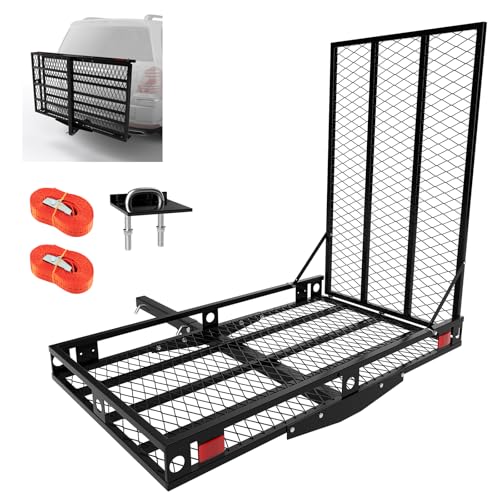
The Goplus Mobility Scooter Carrier is built around a robust 2″ hitch mount and supports up to 500 pounds. Its 50″ x 29.5″ platform provides ample space for scooters, wheelchairs, or large cargo. A 42″ ramp enables straightforward loading and unloading, while the folding design helps with parking when not in use. The carrier’s rust-resistant frame adds durability for long-term outdoor use, and its two tie-down straps support secure transport. This option suits SUVs, trucks, vans, and other vehicles equipped with a standard 2″ hitch.
Mockins 40″x40″x4″ Square Carrier With Ramp

The Mockins hitch carrier stands out with a square 40″ by 40″ bed and a 4″ height, offering a broad loading area for bulky mobility equipment. It supports up to 500 pounds and uses a 2″ hitch receiver. A triple-rail, 46.5″ ramp is designed for gradual loading and has a built-in handle for ease of use. Safety is reinforced by a stabilizer, hitch pin lock, and multiple straps and locks to limit movement at highway speeds. The carrier is designed for SUVs, vans, trucks, and RVs, delivering versatility for varied trips.
Goplus Aluminum Cargo Carrier With Ramp
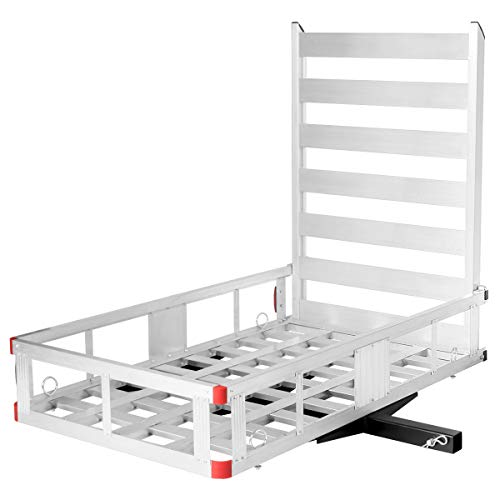
This aluminum carrier delivers strong performance with a 500-pound capacity while keeping weight to about 40 pounds. The 41.5″ loading ramp aids in smooth loading of mobility devices, lawn equipment, and other cargo. Easy assembly is emphasized, and compatibility with 2″ Class III or IV hitches makes it suitable for most cars, SUVs, trucks, and vans. Aluminum construction reduces corrosion risk and improves fuel efficiency slightly due to lighter weight.
IRONMAX Aluminum Cargo Carrier With Ramp

The IRONMAX aluminum carrier emphasizes a lightweight yet sturdy stance, combining aluminum framing with a steel bottom support for stability. The folding ramp design eases loading for mobility aids and other wheeled gear. With 500-pound capacity and reflective safety features, the carrier is suited for daily commuting or long trips. Its simple assembly process and compatibility with most 2″ hitch receivers enhance its practicality for varied vehicle types.
MAXXHAUL 70107 53″ x 19.5″ Carrier

The MAXXHAUL 70107 offers a compact yet capable solution with 53″ by 19.5″ basket dimensions and high side rails to help secure cargo. It uses a standard 2″ hitch receiver and supports up to 500 pounds. The design emphasizes durability with steel construction, making it a reliable choice for transporting scooters, wheelchairs, or other mobility equipment behind a variety of vehicles. Its streamlined profile makes it easier to maneuver in tight spaces compared to larger models.
Buying Guide: Key Considerations For Selecting A Wheelchair Trailer Carrier
The best carrier depends on vehicle type, usage patterns, and cargo specifics. Here are essential factors to weigh when choosing:
- Hitch compatibility and installation: Confirm your vehicle has a Class III or IV 2″ receiver. Check whether the carrier requires additional stabilizers, anti-rattle devices, or locking pins, and whether you prefer quick assembly or tools-free setup.
- Load capacity and ramp design: Most top options support up to 500 pounds. Consider ramp length, approach angle, and whether a folding ramp is preferable for storage. A longer ramp generally eases loading and unloading but increases stowed length.
- Material and durability: Aluminum carriers are lighter and corrosion-resistant but may cost more. Steel carriers tend to be heavier but can offer rugged durability. Look for rust protection and reinforced welds for long-term use.
- Safety features: Anti-tilt devices, reflectors, tie-down points, and strap systems help prevent cargo shift. A stabilizer or anti-rattle mechanism reduces movement while driving at high speeds.
- Vehicle compatibility and space: Larger carriers provide more room but can limit tailgate access or parking. For smaller vehicles, a compact model with high load capacity and strong rails may be optimal.
- Ease of loading and unloading: A built-in handle on the ramp, adjustable ramp length, and straightforward folding mechanisms reduce effort, especially when handling heavier mobility devices.
- Maintenance and warranty: Check for rust resistance, warranty terms, and how easy it is to replace straps or locks. Consider the availability of spare parts and customer support.
- Usage scenarios: If you frequently travel to uneven terrain or need to carry bulky equipment beyond a wheelchair or scooter, prioritize models with robust frames, wider beds, and higher ground clearance.
In selecting a carrier, balance weight and capacity with vehicle compatibility and storage needs. For emergency use, a carrier with secure tie-downs and a dependable ramp can prevent shifting. If frequent long trips occur, aluminum models may offer better longevity with less weight for handling. For heavy, bulky gear, ensure the chosen carrier supports the entire payload without exceeding hitch or vehicle limits.
Always follow manufacturer instructions for installation, load distribution, and securing cargo. Regularly inspect welds, hinges, ramps, and fasteners for signs of wear or corrosion. Remember to verify that the carrier does not impair headlights, taillights, or license plate visibility, and adjust lighting requirements according to local regulations.