Best Gravel Tire for Pavement and Hardpack: Smooth Rides on Mixed Surfaces
Finding the right gravel tire for pavement and hardpack can improve efficiency, comfort, and confidence on mixed-terrain rides. This guide highlights five top options that balance low rolling resistance with dependable grip, ensuring you can carve fast sprints on pavement while still enjoying grip on gravel and hardpack. Each tire brings a distinct blend of center efficiency, cornering traction, and puncture protection to help riders across casual rides, club races, and weekend adventures.
Summary table of selected products:
- WTB Vulpine Gravel Bike Tire (700 x 36) Tubeless Folding – Light & Fast Rolling for Races (Iconic Tan Sidewall)
- MAXXIS Receptor – Dual Compound – 700, 650 – EXO – Tubeless (650x47B)
- WTB Byway 700 x 44 Gravel Bike Tire – Tubeless Folding (Tan Sidewall)
- AMERICAN CLASSIC Gravel Bike Tire, Aggregate – 700 x 40c/45c/50c (Brown, Tubeless)
- WTB Vulpine Gravel Bike Tire (700 x 40) Tubeless Folding – SG2 Protection
WTB Vulpine Gravel Tire 700×36 Tubeless

The WTB Vulpine is designed for fast pavement rolling with a focus on gravel racing and daily riding. Its closely spaced center knobs form a nearly uninterrupted centerline, minimizing rolling resistance to boost speed on pavement, hardpack, and light gravel. The short knobs on the tread provide predictable cornering traction, enabling confident control across varied surfaces. A round profile and efficient knob spacing help reduce puncture risk, delivering durability for rough gravel and debris-strewn paths without sacrificing performance on roads.
MAXXIS Receptor Dual-Compound Gravel Tire

The Maxxis Receptor is a versatile semi-slick gravel tire designed for pavement, hard-packed dirt roads, and light gravel. Its dual compound construction balances rolling resistance with grip, helping riders maintain speed on clear surfaces while delivering traction when the pavement gives way to looser terrain. EXO protection adds cut and abrasion resistance to the sidewalls, extending durability for riders who mix gravel with occasional off-road sections. The Receptor is a strong option for riders prioritizing efficiency with dependable grip.
WTB Byway Gravel Tire 700×44

The Byway combines a smooth centerline with diamond-shaped outer knobs to deliver efficiency on pavement and grip on dirt. Its high-volume casing provides a comfortable ride, while Dual DNA Rubber uses a fast centerline compound with a softer side-knob compound for improved traction. This combination supports fast pavement riding with reliable control on mixed surfaces, making it a practical choice for gravel-enabled commuting and bikepacking.
AMERICAN CLASSIC Aggregate Gravel Tire
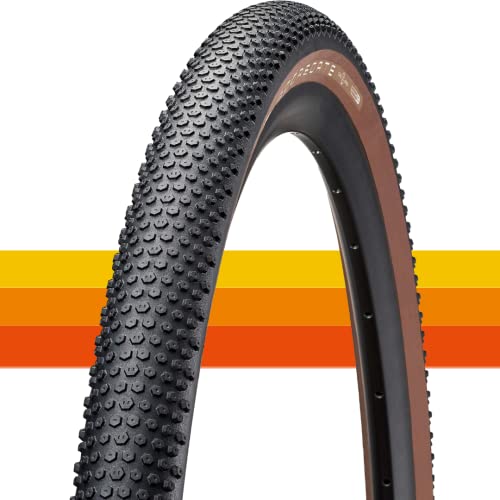
The Aggregate is engineered for minimal road vibration and consistent traction across pavement, hardpack, dirt, and gravel. Its hexagonal, evenly spaced knobs provide predictable handling on diverse surfaces, while Stage 5S Armor adds cut and abrasion resistance for longer durability. The tire’s broad compatibility in sizes like 700 x 40c, 45c, and 50c makes it a flexible option for riders needing a single tire to handle a variety of mixed terrains.
WTB Vulpine Gravel Tire 700×40 SG2

The Vulpine 700×40 variant maintains an emphasis on fast rolling with a tubeless design and SG2 puncture protection. Its centerline efficiency supports quick pavement miles, while the tread’s short knobs enable predictable grip for cornering on gravel and mixed surfaces. The SG2 protection helps reduce flats, making it a robust choice for riders who encounter debris or rough gravel during long rides.
Buying Guide: Key Purchase Considerations
When selecting a gravel tire for pavement and hardpack, consider the following aspects to match riding style and conditions.
- Rolling resistance vs. grip: Tires with a refined centerline and shorter knobs focus on efficiency on roads, while larger side knobs increase grip on loose surfaces. Balance your priorities based on how much pavement you ride versus gravel.
- Tubeless readiness: Tubeless tires reduce pinch flats and allow lower pressures for improved comfort and traction. Check whether rims are tubeless-ready and whether the tire model ships with tubeless-ready beads or sealant recommendations.
- Durability and puncture protection: Look for compounds like SG2 or EXO armor that shield sidewalls from cuts or punctures. Consider tires with reinforced belts or armor for long mixed-terrain tours.
- Volume and fit: Tire width impacts comfort and stability on rough surfaces. Wider tires (40–46 mm on many gravel bikes) provide more cushion on gravel but slightly increase rolling resistance on pavement.
- Rim compatibility: Ensure the tire width is compatible with your rims and tire mounting options (folding bead preferred for easier mounting and lighter weight).
- Terrain variety: For riders who alternate frequently between pavement and gravel, a semi-slick center or fast-rolling centerline with capable side knobs offers the best balance.
- Maintenance and repair: Some tires offer easier patching or more robust puncture protection. Consider your typical roadside support situation and the ease of field repairs.
Performance Perspectives: What Each Tire Excels At
Riders seeking maximum speed on paved sections tend to favor tires with a tight centerline and minimal rolling resistance, such as the WTB Vulpine variants and the Byway. Those who balance road miles with light gravel often benefit from the Maxxis Receptor’s dual-compound design and EXO protection, which guard against cuts while maintaining efficiency. For mixed adventures that lean toward gravel exploration without sacrificing pavement speed, the American Classic Aggregate provides all-around performance with a robust armor layer. The Byway and Vulpine lines emphasize a combination of efficient center rollout and confident grip on looser surfaces, making them strong candidates for riders who frequently switch surfaces.
Usage Scenarios: Choosing By Terrain Type
If your routes are mostly paved with occasional gravel, opt for tires with a pronounced centerline and lower knob height, such as the Vulpine or Receptor. For bikepacking or daily commuting across mixed terrain, choose tires with higher-volume casings and durable bead-to-bead technology like the Aggregate or Byway. For frequent debris or rough gravel, SG2 or EXO-protected tires offer an added layer of protection. Finally, consider tubeless configurations if you ride aggressively or frequently ride on rough surfaces where pinch flats are common.
Maintenance Tips for Gravel-Pavement Tires
Regularly inspect tread for cuts and wear, especially on the sidewalls. Keep tubeless tires properly aired with sealant, and check bead seating after installation. Rotate front and rear tires if wear patterns become uneven, and adjust your tire pressures based on load, temperature, and terrain to optimize grip and ride comfort. Cleaning tires after muddy or sandy rides helps prevent grit from embedding in the tread, preserving performance on future rides.