Best 2 Stroke Go Kart Engines and Related Options for Off‑Road Fun
Finding the right engine for a go-kart can boost performance, reliability, and maintenance ease. This article highlights top 2-stroke options and strong 4-stroke alternatives from Amazon that fit go-kart projects for teens and adults. Compare power, fuel efficiency, and durability to choose the best fit for dirt, grass, snow, or mud adventures.
| Product | Brand | Engine Type | Approx. Power | Notes |
|---|---|---|---|---|
| Zyliathor 90cc 2-Stroke Off-Road Go Kart | Zyliathor | 2-Stroke | 90cc | Chained RWD, hydraulic brakes, all-terrain tires |
| NAZEAOB 49cc 2-Stroke Engine | NAZEAOB | 2-Stroke | 49cc | Electronic ignition, pull-start |
| 49CC Racing Engine Set 2 Stroke | LYNICESHOP | 2-Stroke | 49cc | Complete racing kit, high rpm |
| maXpeedingrods 7HP 212cc 4-Stroke | maXpeedingrods | 4-Stroke | 212cc | OHV, versatile uses beyond go-karts |
| Aceup Energy 7HP 212cc 4-Stroke | Aceup Energy | 4-Stroke | 212cc | Horizontal shaft, recoil start |
Note: The list prioritizes 2-stroke options commonly used for go-karts while also including solid 4-stroke alternatives for comparison. All models feature practical starting mechanisms and robust construction aimed at hobbyist and entry-level builds.
Zyliathor 90cc 2-Stroke Go Kart Engine

The Zyliathor 90cc 2-Stroke engine is designed for off-road go-kart use, with a pull-start initiation and chain-driven rear-wheel drive. It pairs a robust frame with deep-tread tires suitable for dirt, grass, gravel, sand, and light snow. The package features hydraulic disc brakes and a low center of gravity for stability on uneven terrain. This option emphasizes straightforward upkeep and reliable off-road performance, making it a solid choice for riders seeking simple maintenance and responsive throttle control.
maXpeedingrods 7HP 212cc 4-Stroke Engine

This 212cc four-stroke engine delivers about 7 horsepower and comes with a horizontal shaft for easy mounting on a variety of go-kart frames. It features an overhead valve (OHV) design to improve power output and efficiency, along with a compact fuel system and tuned exhaust. Suitable for builders who want a robust, fuel-efficient option that supports continuous use in tougher conditions.
LIAPDG 420CC Gasoline Powered Go Kart Engine

The LIAPDG 420cc engine offers strong power and efficiency with a 3.6-liter fuel capacity and a 0.6-liter oil reserve. Its overhead valve design supports reduced carbon buildup and fuel consumption, and the engine is designed for extended operation with an efficient cooling system and a high-precision carburetor to minimize fuel use. This option suits larger go-kart builds requiring higher power output and longer run times between refueling.
Aceup Energy 7HP 212cc 4-Stroke Engine
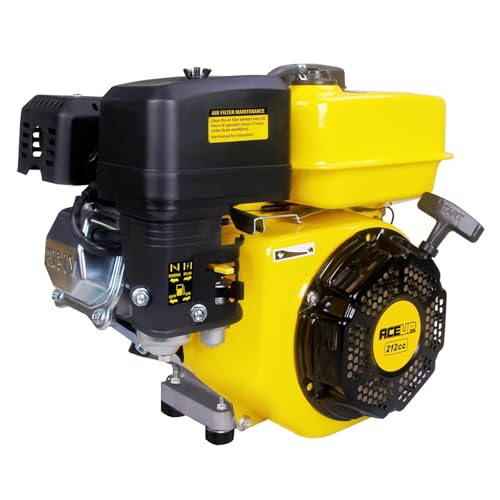
The Aceup Energy 7HP 212cc engine is a horizontal-shaft, 4-stroke OHV motor with recoil start. It is designed for versatility, suitable for go-karts and other equipment like log splitters and pressure washers. Its compact grip and mounting options simplify installation on common kart frames while delivering steady torque and reliable ignition for repeated starts in variable terrain.
NAZEAOB 49cc 2-Stroke Engine

The NAZEAOB 49cc 2-stroke engine is built with durable aluminum alloy and iron materials to withstand demanding conditions. It delivers high intake and exhaust efficiency and offers a driving power around 1.7 kW at 6000 rpm. The electronic ignition and self-resetting pull-start improve ease of startup, making it a practical choice for small go-kart projects or pocket bike adaptations where space and weight are key concerns.
Introduction to Key Considerations
When selecting a go-kart engine, consider displacement, stroke type, starting method, mounting compatibility, fuel efficiency, and cooling. 2-stroke engines deliver higher power-to-weight ratios, but 4-stroke engines often provide longer life and smoother operation. For off-road use, suspension, braking, and chassis strength are crucial. Ensure the engine’s mounting points align with your frame, and verify available accessories such as carburetors, exhausts, and pull-starter mechanisms.
Buying Guide: Key Purchase Considerations
- Engine Type and Power: Choose between 2-stroke for higher power density and 4-stroke for durability and lower maintenance in longer sessions.
- Mounting Compatibility: Check shaft size, keyway, and bolt pattern to fit your kart frame without extensive modification.
- Fuel System and Efficiency: Look for efficient carburetors and compact fuel tanks suited to your intended ride time.
- Starting Mechanism: Pull-start vs. electric start affects ease of use, particularly in cold or dusty environments.
- Cooling and Durability: Ensure adequate cooling for hot climates and tough terrains; materials matter for long-term use.
- Availability of Spare Parts: Confirm readily available gaskets, seals, and replacement components in case of maintenance.
- Weight Considerations: Lighter engines improve handling, but heavier engines can offer more torque for steep terrains.
- Maintenance Footprint: Consider ease of access for spark plugs, air filters, and fuel lines to minimize downtime.
Across these options, 2-stroke engines provide brisk performance for compact builds, while 4-stroke engines offer steadier operation and easier maintenance for longer sessions. For a balanced project, evaluate how each engine’s torque curve, RPM range, and mounting geometry align with your kart frame, driver weight, and intended terrain.