Best Deep Cycle Batteries for RV: Durable Options for Off-Grid Power
Finding reliable deep cycle batteries for RV use is essential for peaceful, off-grid adventures. This guide highlights five top options with strong reliability, safe chemistry, and long life. Each product is evaluated based on capacity, discharge current, maintenance needs, and temperature tolerance to help you compare performance for camping, travel, and full-time RV living.
The following table summarizes the featured products, including key specs and intended use. Use this quick reference to skim differences before diving into in-depth sections.
| Product | Type | Capacity | Best For | Approx. Weight |
|---|---|---|---|---|
| Weize Deep Cycle AGM 12V 100Ah | AGM | 100Ah | RV, Solar, Off-Grid | ~24 lbs |
| Renogy Deep Cycle AGM 12V 100Ah | AGM | 100Ah | RV, Cabin, Marine | ~26 lbs |
| GRNOE 2-Pack 12V 100Ah LiFePO4 | LiFePO4 | 100Ah each | Long life, Cold climates | ~22.5 lbs per battery |
| WEIZE BCI Group 24M 12V 90Ah | AGM | 90Ah | Dual-purpose Marine & RV | ~20-25 lbs |
| OPTIMA D34M BlueTop | AGM | 55Ah | Starting power, RV & boats | ~43 lbs |
Weize Deep Cycle AGM 100Ah for RV and Off-Grid
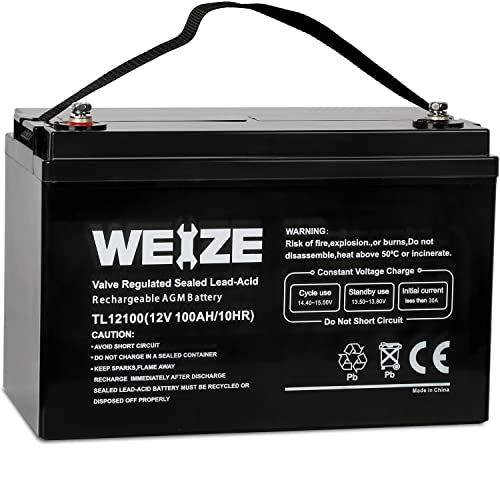
The Weize 12V 100Ah AGM battery is maintenance-free and designed to reduce self-discharge to a low monthly level. Its sealed construction minimizes acid risk, supporting RV setups, solar arrays, and micro off-grid systems. Temperature tolerance supports charging in cooler and warmer environments, with a strong 1100A max discharge current for short, high-demand bursts. This option emphasizes longevity and simple upkeep, making it suitable for campers who prefer fewer maintenance tasks.
Renogy Deep Cycle AGM 100Ah For RV Use

Renogy’s AGM battery is a trusted choice for RVs, cabins, and marine installations. It supports series and parallel connections, enabling scalable energy banks for larger RV systems. Minimal maintenance and a focus on safe chemistry help reduce troubleshooting. The design emphasizes safety and stable performance under typical RV electrical loads, with a proven track record and broad compatibility with off-grid setups.
GRNOE LiFePO4 12V 100Ah Battery Duo

This 2-pack of LiFePO4 batteries offers high energy density at a lighter weight, extended cycle life, and built-in BMS protection. Its low-temperature cut-off helps prevent charging issues in cold RV environments, and its deep-cycle capability supports long boondocking periods with solar or wind energy. Note the need for a compatible charger that tolerates LiFePO4 charging profiles and voltage expectations.
WEIZE Dual Purpose AGM Group 24M Battery

This Group 24M AGM battery combines dual-purpose deep cycling with reliable starting power, designed for RV or marine use. It features quick charging capabilities and a practical balance between cycle life and starting performance. It’s positioned as a flexible option for mixed-use systems, where both house loads and engine start power are needed in one pack.
OPTIMA BlueTop D34M Deep Cycle and Starting Battery

OPTIMA D34M uses SpiralCell Technology to deliver high power and reliability for starting and deep-cycle needs. Despite a smaller capacity, its resilience in bad weather and faster charging characteristics make it a favorite for RVs that need dependable starting power alongside house loads. The dual terminal design supports versatile mounting and compatibility with various RV electrical systems.
Buying Guide: Key Considerations For Choosing RV Deep Cycle Batteries
When comparing deep cycle batteries for RVs, buyers should weigh chemistry, capacity, weight, cycle life, and charging requirements. AGM batteries are known for maintenance-free operation and spill resistance, while LiFePO4 options offer longer lifespans and lighter weight at a higher upfront cost. Consider the following factors to tailor your choice to your travel style and power needs.
- Chemistry and safety: AGM and LiFePO4 each have distinct safety profiles. AGM is robust and maintenance-free, while LiFePO4 provides longer cycle life and lighter weight, with proper BMS protection.
- Capacity and discharge: Match Ah ratings to your typical daily draw. RVs with full-time living may require larger capacities or multiple batteries in parallel/series.
- Weight and installability: Heavier batteries affect how you stage and transport them. LiFePO4 often weighs less for the same usable capacity.
- Temperature tolerance: Cold weather affects charging efficiency. Some models include low-temperature cut-off or better cold-weather performance.
- Charger compatibility: Ensure your charger supports the battery chemistry (desulfation, for AGM; lithium-specific profiles for LiFePO4). Overcharging or wrong profiles can shorten life.
- Maintenance and warranties: Look for sealed designs with minimal venting. Check warranty terms and what activities void coverage (e.g., over-discharge).
- System design: Plan for series/parallel configurations if your build requires higher voltage or amperage. Ensure BMS features protect against overcurrent and short circuits.
- Cost of ownership: Initial price is important, but lifetime cycle costs matter. LiFePO4 often costs more upfront but lasts many years longer in RV use.
For most recreational RVers, a balance between reliability, maintenance, and total cost favors AGM options like Weize or Renogy for straightforward setups. If you prioritize long-term life, lighter weight, and deeper cycles, LiFePO4 options such as GRNOE’s batteries offer substantial advantages with proper charging equipment. Always verify charging voltage targets, wiring, and safety clearances before installation.