Best Car Diagnostic Code Reader: Find the Right OBD2 Scanner for Your Vehicle
Choosing the right car diagnostic code reader can save time and money by quickly identifying why the check engine light is on and what repairs may be necessary. The following selections cover a range of features, from basic code reading to live data and advanced diagnostics, to help American drivers pick a tool that fits their needs and budget. Each option is compatible with most 1996 and newer vehicles that support OBD-II protocols.
The following summary table highlights five highly capable OBD2 scanners to consider. Clicking a product name will take you to its Amazon listing for full specifications and user reviews.
| Product | Brand | Key Capabilities | Link |
|---|---|---|---|
| ANCEL AD310 Classic Enhanced Universal OBD II Scanner | ANCEL | Read/clear trouble codes, live data, freeze frame, I/M readiness, no battery needed | Product Link |
| VDIAGTOOL VD10 OBD2 Scanner | VDIAGTOOL | Read/clear codes, I/M readiness, DTC definitions, 3000+ codes, TFT display | Product Link |
| MOTOPOWER MP69033 Car OBD2 Scanner | MOTOPOWER | 9 protocols, live data, 2.8″ LCD, no battery required | Product Link |
| FOXWELL NT301 OBD2 Scanner | FOXWELL | Read/Clear DTCs, live data, VIN retrieval, MIL reset (limited scope) | Product Link |
| Autel MS309 Universal OBD2 Scanner | Autel | Basic OBDII reading, code clearing, general compatibility, user tips included | Product Link |
ANCEL AD310 Classic Enhanced Universal OBD II Scanner
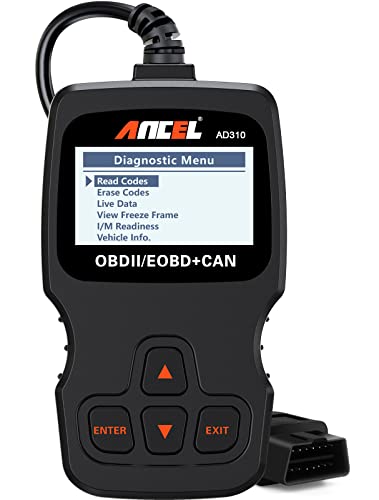
The AD310 is a compact, user-friendly OBD2 scanner designed for quick diagnostic work on most 1996 and newer vehicles. It reads and clears emission-related codes, displays live data, and provides freeze-frame and I/M readiness data. A reliable choice for DIYers and professionals seeking a compact device that does not require external power or batteries. Its sturdy build and clearly labeled buttons help simplify use in typical automotive environments, and its broad compatibility supports a wide range of vehicles.
Key points: fast code retrieval, simple operation, and straightforward data display. It is frequently recommended by automotive specialists for its balance of affordability and reliability. The AD310’s design emphasizes portability and ease of use, making it suitable for in-garage diagnostics or on-the-road checks when a fault occurs. This scanner is ideal for monitoring engine status after repairs and verifying that issues are resolved before driving longer distances.
VDIAGTOOL VD10 OBD2 Scanner
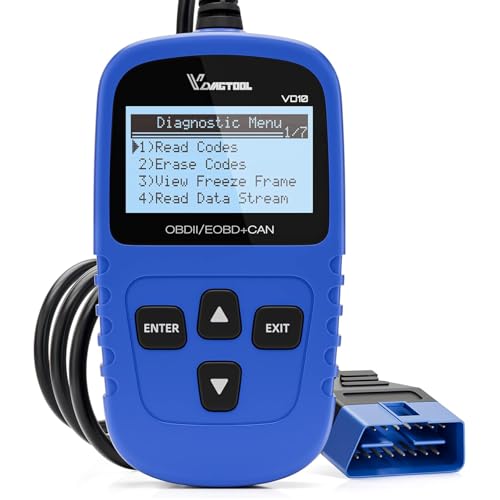
The VD10 is a user-friendly diagnostic tool designed for DIY enthusiasts and casual drivers. It attaches to the OBD-II port and delivers quick diagnostic results, including DTC readouts, clearing codes, and viewing freeze-frame data. The device includes I/M readiness checks and a built-in database to provide DTC definitions, helping users understand the root cause of engine illumination without needing an online search. Its TFT display helps keep information legible in various lighting conditions.
Practical benefits include fast troubleshooting, straightforward code lookup, and the ability to reset the MIL after repairs. The VD10 emphasizes accessibility and reliability, with support for multiple languages and broad vehicle compatibility, making it a versatile option for households with more than one vehicle or for those who frequently perform basic maintenance tasks themselves.
MOTOPOWER MP69033 Car OBD2 Scanner

The MP69033 scanner delivers practical, multi-function OBD-II diagnostics for a broad range of vehicles since 1996. It supports nine protocols, enabling compatibility with most US, EU, and Asian models, and offers features such as real-time data, vehicle speed, engine load, coolant temperature, and RPM. The device operates without a separate battery by drawing power from the vehicle’s OBD-II port and provides a clear LCD display for easy interpretation of live data and fault codes. An economical option for frequent car owners who need a reliable tool for routine diagnostics and monitoring.
FOXWELL NT301 OBD2 Scanner

The NT301 is a professional-grade OBD2 scanner focused on essential diagnostics. It provides access to DTCs, emissions readiness status, and the ability to reset the MIL. It can retrieve the VIN and display live data with basic graphing capabilities, helping users identify trends in sensor data. While it is not designed to diagnose every subsystem (e.g., ABS, SRS, or transmission), it is well-suited for quick checks and routine maintenance, offering clear codes and definitions to support efficient troubleshooting.
Autel MS309 Universal OBD2 Scanner

The Autel MS309 is a plug-and-play OBD2 scanner designed for straightforward code reading and clearing in vehicles manufactured after 1996. It emphasizes core OBD-II functionality and basic diagnostic capabilities without extensive integration into vehicle systems. This makes it a suitable choice for buyers needing a dependable, low-cost tool for routine checks and general maintenance. The MS309 package often includes guidance for setup and use, assisting users in navigating common steps to interpret fault codes and monitor readiness statuses.
Buying Guide: Key Purchase Considerations
When selecting a car diagnostic code reader, consider these factors to ensure you choose a tool that matches your vehicle and use case:
- Vehicle compatibility: Most OBD-II tools work with 1996 and newer vehicles, but some models (especially certain FCA or SGW-enabled cars) may require a more advanced or brand-specific tool. Always confirm compatibility with your vehicle’s year, make, and model.
- Code reading vs. full diagnostics: Basic tools read/clear codes and show freeze-frame data, while higher-end models offer live data, bidirectional controls, graphing, and extensive DTC libraries. Decide how deep you need diagnostics to be.
- Live data and graphing: Live data viewing helps diagnose fuel trims, sensor health, and timing issues. Graphing lets you spot trends over time rather than relying on single data points.
- Power source: Many scanners pull power from the vehicle’s OBD-II port, while some require batteries. If you’re often working in areas without easy power options, a battery-powered unit may be more convenient.
- Display and interface: A readable screen and intuitive menu reduce diagnostic time. TFT displays with backlighting and multiple languages are beneficial for diverse users.
- Software updates and DTC library: A large, regularly updated DTC database helps identify error codes quickly. Consider whether the tool supports updates and how updates are delivered (via PC, app, or cloud).
- Multilingual support: For non-English users or households with diverse languages, a device offering multiple language options can improve usability and reduce misinterpretation of codes.
- Form factor and durability: A compact, sturdy unit is easier to carry and withstands typical workshop conditions. Cable length and build quality are practical considerations for on-site use.
- Price-to-value balance: While premium tools offer expanded features, assess whether those features align with your actual needs. For many home users, a reliable basic model provides ample functionality for routine maintenance.
In summary, buyers should align tool capabilities with their vehicle fleet and diagnostic goals. If you’re primarily checking for emissions readiness and basic fault codes, a compact scanner with a clear display and fast reads may suffice. For hobbyists and professionals who routinely diagnose vehicles across a range of brands, models with extensive DTC libraries and robust live data features may justify the investment.