Best E-Bike Trailer for Car: Top Racks to Safely Transport Your Electric Bikes
Choosing the right trailer-style bike carrier for your car can simplify long-distance trips and daily commutes with e-bikes. The options below highlight racks designed for two bikes or more, with features that protect bikes, fit fat tires, and ensure stable transport. This guide focuses on RV, trailer, and standard car hitch compatibility, helping you compare load capacity, folding or tilting options, and anti-wobble designs. Use the table below for a quick snapshot of the top picks before diving into detailed product sections.
| Product | Brand | Capacity | Receiver | Main Benefit |
|---|---|---|---|---|
| Young Hitch Mount Bike Rack With Ramp | Young Electric | 200 lbs total | 2-inch | RV-approved, dual-bike stability |
| Young Bike Rack Hitch For Car | Young Electric | 200 lbs total | 2-inch | Fold-and-tilt for trunk access |
| VEVOR Bike Cargo Trailer | VEVOR | 160 lbs | Universal hitch | Heavy-duty trailer-style cargo carrier |
| TANX Bike Racks for Ebikes | TANX | 160 lbs | 2-inch | Fat tire compatibility, folding/tilting |
| CRAVOT CyberRack E2 Plus | CRAVOT | 200 lbs | 2-inch | Three-point support, ramp option |
Young Hitch Mount Bike Rack With Ramp (200 lbs)

The Young Electric rack pairs reinforced steel and aluminum for durable two-bike transport with a total 200 lb capacity. It uses patent secure wheel cradles and an anti-wobble structure to minimize movement during highway travel. This model is RV-approved, offering compatibility for motorhomes and trailers, delivering stable mounting for heavier e-bikes or multiple conventional bikes. The two-arm design and fixed mounting improve security on varied terrains.
Young Bike Rack Hitch For Car (2-Bike, 200LB)
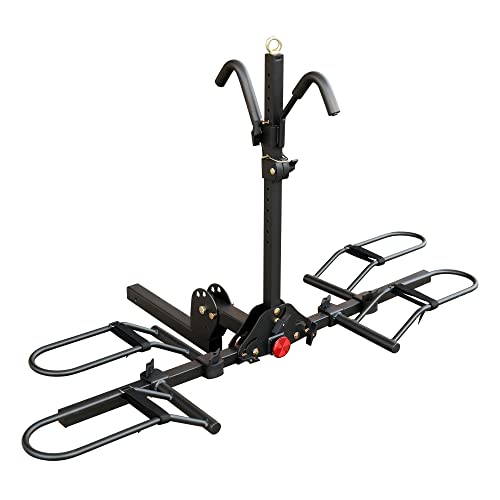
This hitch-mounted rack provides secure, wobble-free transport for two bikes up to a combined 200 lbs. Soft padded hooks help prevent frame scratches, while a hitch tightener reduces movement within the 2-inch receiver. It folds for trunk access and tilts with a quick-release lever, enabling easy loading and unloading without removing bikes. It accommodates wheel sizes from 20″ to 29″ and tires up to 5 inches wide.
VEVOR Bike Cargo Trailer (160 lbs)

The VEVOR bike cargo trailer offers up to 160 lbs of load capacity in a heavy-duty frame with rust-resistant powder coating. Its industrial-grade construction emphasizes durability for long trips and outdoor use. The trailer uses 16″ tires with iron hubs to deliver stability across different surfaces, making it a practical option for transporting bikes and gear on family trips or camping excursions.
TANX Ebikes Fork 2-Bike Rack (160 lbs)

The TANX hitch rack is built from high-strength alloy steel with a genuine 160 lb capacity and supports tires up to 5 inches wide. It includes padded clamps to prevent paint damage and a locking system to prevent detachment on rough roads. Folding and tilting features let you access your trunk without removing the bikes, providing a compact storage profile when not in use.
CRAVOT CyberRack E2 Plus With Ramp (200 lbs)

The CRAVOT E2 Plus offers a 200 lb total capacity with a foldable ramp for easy loading of heavier e-bikes. It features a V-shaped front wheel cradle to fit a range of tire sizes and a semi-enclosed design for increased stability. The rack uses a three-point support system with padding and rubber covers to protect bikes during transport. Its three-position foldable design aids storage and trunk access.
Young Electric 100L B Bike Rack (1-Bike)

This single-bike rack from Young Electric provides 100 lb capacity with reinforced steel and aluminum construction. It includes an anti-wobble design and secure wheel cradles, making it suitable for RV use and motorhome adventures. The compact footprint supports transporting one heavy e-bike or multiple conventional bikes, depending on setup and vehicle compatibility.
Buying Guide: Key Purchase Considerations
- Vehicle compatibility: Verify receiver size (most listed are 2-inch), hitch type, and any clearance issues with your trunk or tailgate. Some racks are designed specifically for RVs and motorhomes and may require extra installation steps.
- Load capacity and tire width: E-bikes tend to be heavier; choose a rack with safe total weight capacity and support for wide tires (up to 5 inches is common for fat tires).
- Stability features: Look for anti-wobble stabilizers, padded clamps, and three-point securing systems to prevent frame damage and bike movement during transit.
- Ease of use: Folding and tilting mechanisms that allow trunk access without removing bikes save time. Ramp options enable easier loading of heavy e-bikes.
- Security and protection: Consider locking features, soft padding, and rubber covers to reduce scratches. Ensure reflectors or lights for visibility if used on the roadside.
- Storage and travel needs: If space is a concern, prefer foldable racks that tuck away when not in use. For frequent travelers, a lightweight yet durable design may balance practicality and safety.
- Durability and weather resistance: Powder-coated or rust-resistant frames extend life in varied climates. Aluminum components can reduce corrosion and weight.
- Maintenance: Check for warranty coverage and availability of replacement parts, such as wheel cradles and straps, to ensure long-term reliability.
- Safety compliance: Ensure the rack complies with road safety guidelines and does not interfere with vehicle lights or license plate visibility.
In evaluating these options, prioritize stability, weight distribution, and ease of use. If you regularly transport heavier e-bikes or fat-tire models, models with 200 lb capacity and robust anti-wobble designs offer the best balance of security and versatility. For RV or trailer setups, RV-approved racks simplify installation and reduce road concerns. Finally, consider how often you need trunk clearance access, and pick a folding/tilting model that aligns with your typical loading routine.