Best Front Suspension Forks for Mountain Bikes on Trails
Choosing the right front suspension fork can transform how your mountain bike handles rough terrain, climbs technical trails, and soaks up chatter from rocks and roots. This guide features five top front forks designed for 26/27.5/29-inch wheels, focusing on travel range, lockout options, weight, stiffness, and compatibility. Each option below includes core specs and key capabilities to help you pick a model that matches your riding style and local terrain.
| Product | Travel | Lockout | Steerer | Wheel Fit | Weight (approx.) |
|---|---|---|---|---|---|
| BUCKLOS 100mm Front Fork | 100 mm | Manual Lockout | 28.6 mm Straight | 26/27.5/29 inch | ≈ 2598 g |
| BUCKLOS 140mm Travel Fork | 140 mm | Lockout + Rebound | 1-1/8″ Straight | 26/27.5/29 inch | ≈ 1976 g |
| Exceedhub 120mm Fork | 120 mm | Lockout | 28.6 mm Straight | 26/27.5/29 inch | ≈ — |
| BUCKLOS 180mm Fat Tire Fork | 180 mm | Manual Lockout | 135 mm Hub, 135 mm | 20 inch fat bikes | ≈ 2645 g |
| MTB Air Fork, 120mm | 120 mm | Remote/Manual Lockout | 27.5 inch compatibility | 26/27.5/29 inch | ≈ 1800 g |
Below you will find five selected forks with varying travel, materials, and lockout configurations. Each entry includes direct product details and how it may suit different trail conditions and rider preferences. All models support disc brakes, a common requirement for modern mountain bikes, and are suitable for a range of wheel sizes to ensure a broad fit across popular MTB setups.
BUCKLOS 100mm Front Suspension Fork

The BUCKLOS 100mm front fork is designed for 26/27.5/29 inch bikes with a 28.6 mm straight steerer and a 9 mm QR. It features a manual lockout and a 100 mm travel option ideal for cross-country riding. The crown race is 30 mm, and the tube diameter is 32 mm, contributing to a solid, predictable steering feel. Weighing around 2598 g, this fork balances durability and support for everyday mountain trails. A removable BUCKLOS sticker lets riders customize the look without leaving residue, and manual ABS adjustment lets you tune the suspension softness and stiffness to suit different terrains and rider weight.
Key considerations:
– Suitability for XC to light AM riding on varied terrain.
– Lockout provides on-the-fly firming for climbs or long straights.
– Heavier weight may affect unsprung mass on high-speed sections, but rigidity helps precise handling.
– Travel is moderate, which is good for all-round trail performance.
BUCKLOS 140mm Travel Fork

This BUCKLOS model offers 140 mm of travel with 34 mm stanchions for improved stiffness and control across rough trails. It uses a 9 mm QR and a 1-1/8″ straight or tapered steerer, depending on your fork model. Crown lockout with rebound adjustment helps tailor the fork’s return to your riding style, whether sprinting on a climb or absorbing impacts on a technical descent. The frame weight is maintained by aluminum-magnesium alloy upper tubes, aiding rigidity and steering precision. External rebound with 20-click adjustment supports personalized performance for varied terrain.
Key considerations:
– Higher travel suits more aggressive all-mountain and enduro-style riding.
– Rebound adjustment allows fine-tuning for different rider weights and trail feedback.
– Crown lockout enhances efficiency on climbs, though it reduces downhill compliance when engaged.
– Overall weight is lower than the 100 mm model, supporting better acceleration and ride feel.
Exceedhub 120mm Suspension Fork
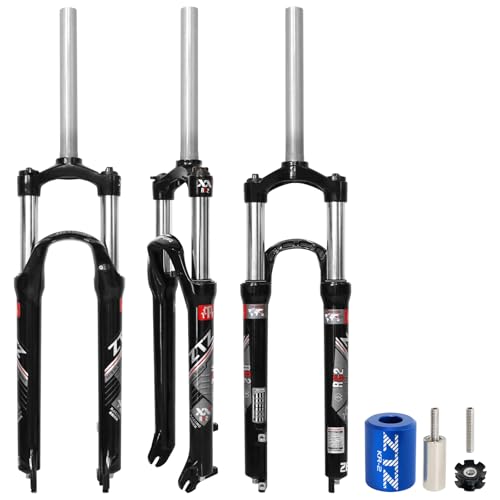
Exceedhub’s 120 mm travel fork is built for 26/27.5/29 inch wheels with a 28.6 mm threadless straight steerer and 9 mm QR. It uses a crown lockout design and a star nut for setup, with an aluminum-magnesium alloy construction for durability and reduced mass. The fork is described as stable and suitable for long rides, with an emphasis on fatigue reduction during extended sessions. The single-crown architecture contributes to a simple, reliable front-end feel and predictable steering, especially on challenging cross-country routes.
Key considerations:
– A balance between comfort and control for long rides.
– Lockout is straightforward for climbs, while damping helps handle rough sections.
– Material choice aims to optimize stiffness without excessive weight.
– Compatibility with a wide range of wheel sizes makes it versatile for mixed MTB builds.
BUCKLOS 180mm Fat Tire Front Fork

The BUCKLOS 180 mm fat-tire fork is engineered for 20-inch fat bikes and snow or beach riding, with a 180 mm travel range and 135 mm spacing hub. It uses a straight 135 mm tube and manual lockout, offering robust damping for soft surfaces and aggressive terrain. Weighing approximately 2645 g, this fork aims to keep the overall bike responsive while delivering substantial impact absorption on loose, soft surfaces. The model emphasizes heavy-duty performance for winter or off-road adventures where extra travel is beneficial.
Key considerations:
– Best suited for fat-tire or small-wheel setups on soft-surface terrain.
– High travel increases impact absorption but adds weight.
– Lockout helps on climbs or smooth sections, but pay attention to steering feel once engaged.
– Ensure compatibility with hub spacing and tire clearance before purchase.
ZTZ MTB Air Front Fork

The ZTZ air suspension fork is designed for 26/27.5/29 inch mountain bikes with a 28.6 mm threadless tapered steerer and 120 mm travel. It features remote lockout and a 9 mm QR, with a weight around 1800 g, offering a favorable weight-to-stiffness ratio. The fork uses an oil-and-gas structure, allowing easy air pressure adjustments to match rider weight and trail conditions. The alloy construction balances strength with lightness, supporting all-around performance for diverse trail types.
Key considerations:
– Air fork allows precise pressure tuning for rider weight and terrain.
– Remote lockout provides quick adjustment on the fly, especially useful on mixed terrain.
– Tapered steerer improves steering precision at higher speeds.
– Ensure compatibility with your frame’s crown and hub spacing.
Buying Guide
- Travel range: Match travel to your typical riding terrain. XC riders favor 100–120 mm, while all-mountain and enduro riders may prefer 140–180 mm for added control on rough descents.
- Lockout type: Manual lockouts are simple and reliable for climbs, while remote or external lockouts can save energy on long rides but add complexity.
- Steerer and axle compatibility: Check steerer diameter (usually 1-1/8″ or 1-1/2″ tapered), straight vs. tapered, and hub spacing (100 mm QR, 135 mm, etc.) to ensure proper fit with your frame.
- Weight vs. stiffness: Lighter forks improve efficiency but may compromise rigidity on aggressive terrain. Heavier forks often offer better durability and stability.
- Material and build: Aluminum-magnesium alloy constructions provide a balance of strength and weight. Ensure seals and damping components suit your riding style and maintenance willingness.
- Wheel compatibility: Confirm wheel diameter (26/27.5/29) and tire width allowances, especially for higher travel forks with wider crowns and thicker stanchions.
- Maintenance and serviceability: Consider ease of service, availability of replacement parts, and cost of maintenance intervals when selecting a model.
- Intended riding style: Cross-country, trail, all-mountain, and enduro demands differ. Pick a fork whose damping and lockout characteristics align with your typical sessions.
- Budget and availability: While all models offer solid performance, weight, travel, and features vary. Availability in your region and compatibility with your bike should guide the final choice.
Across the options above, riders seeking a balance of durability, tunability, and trail-ready performance may prioritize models with higher travel, external lockouts, and robust materials. For lighter riders or cross-country setups, the 100–120 mm forks offer strong efficiency and reliable handling. For more aggressive or varied terrain, 140–180 mm travel forks provide enhanced impact absorption and stability, especially on descents. Always verify compatibility with your frame and tires before purchasing to optimize performance and safety on the trail.