Best 100 Gallon Fuel Cell for Truck Bed: Top 5 Large-Capacity Options
Finding a high-capacity fuel cell for a truck bed involves balancing size, compatibility, and durability. This guide highlights five substantial fuel cells from trusted brands that align with the concept of a large-capacity, truck-bed installation. While most consumer models hover around 15–20 gallons, these selections emphasize robust aluminum construction, integrated level sensors, and anti-slosh features to support steady fuel delivery on demanding routes and builds.
Summary Table of Selected Products (approximate capacity and key features)
- EVIL ENERGY 19 Gallon Fuel Cell Gas Tank Aluminum with Level Sender Street Drift Silver — 29.5″ L × 12″ W × 12″ H, 8AN fittings, built-in 3–90 ohm level sensor, anti-slosh foam
- EVIL ENERGY 19 Gallon Fuel Cell Gas Tank Aluminum with Level Sender Street Drift Black — 29.5″ L × 12″ W × 12″ H, 8AN fittings, built-in 3–90 ohm level sensor, anti-slosh foam
- MOTORHOT 20 Gallon Fuel Cell 80L Aluminum Fuel Tank For Truck Bed — 19.75″ L × 24″ W × 10″ H, 0-90 Ohm fuel sender, aluminum construction
- EVIL ENERGY 15 Gallon Fuel Cell Gas Tank Aluminum with Level Sender Black Street Drift — 19″ L × 17″ W × 10.03″ H, 10AN fittings, built-in 3–90 ohm sensor, anti-slosh foam
- Dexepe Universal 20 Gallon 80L Fuel Cell Polished Aluminum — 20 gallon capacity, includes cap and level sender, anti-slosh foam, universal fit
EVIL ENERGY 19 Gallon Fuel Cell Silver
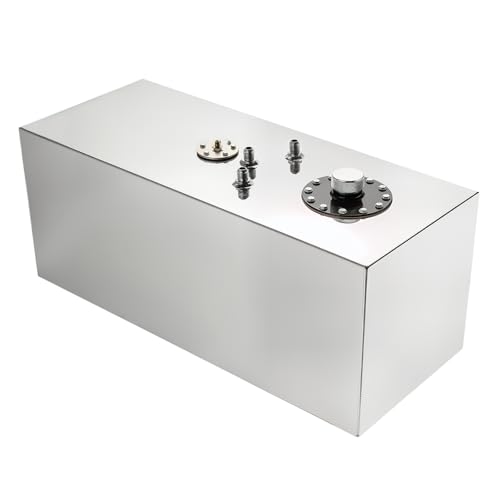
The EVIL ENERGY 19 Gallon Fuel Cell in Silver offers a practical balance of capacity and fit for truck beds. It measures 29.5 inches long, 12 inches wide, and 12 inches high, with 8AN fittings for versatile line routing. The unit includes a built-in 3–90 ohm level sensor and internal anti-slosh foam to maintain fuel continuity during abrupt vehicle movement. It is compatible with fuel, diesel, alcohol, methanol, water, and ethanol, though not suitable for E85 when used with CPE fuel lines. This model emphasizes durability and reliable measurement for large installations.
Designed for squarely mounting within a truck bed, this aluminum fuel cell prioritizes anti-slosh capabilities to reduce fuel starvation during acceleration, braking, and cornering. The included level sender enables straightforward monitoring from the driver’s gauge cluster or an aftermarket monitoring system. Potential buyers should verify the compatibility of fuel types with their fuel system and ensure adequate clearance for the inlet/outlet fittings and the level sensor harness.
EVIL ENERGY 19 Gallon Fuel Cell Black Street Drift
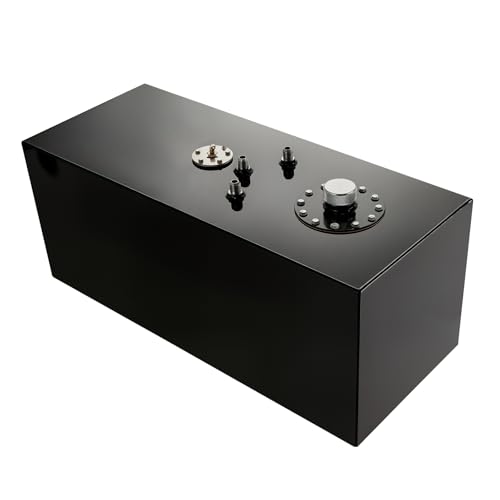
This EVIL ENERGY 19 Gallon Fuel Cell in black mirrors the silver version in capacity and sensor features. Its dimensions and 8AN inlet/outlet fittings provide flexible installation options for truck beds with tight tolerances. The unit again includes a built-in 3–90 ohm level sensor and internal anti-slosh foam to help stabilize fuel flow. The black finish gives a sleek, durable exterior that can resist corrosion and road grime while maintaining accurate fuel level readings during long hauls.
When planning installation, consider the routing of lines and the location of the level sender to avoid interference with bed components or structural reinforcements. This model is well-suited for builds that prioritize continuous fuel feed and straightforward sensor integration, especially in applications requiring clear visual fuel measurement.
MOTORHOT 20 Gallon Aluminum Fuel Cell 80L

The MOTORHOT 20 Gallon Fuel Cell offers a larger 80-liter capacity suitable for longer trips or heavier truck bed setups. Dimensions are 19.75 inches in length, 24 inches in width, and 10 inches in height, with a 0–90 ohm fuel sender for precise measurement. The tank is constructed from high-grade aluminum, providing a durable yet relatively lightweight solution. It ships with a fuel cap and is designed for easy cleaning and maintenance, ideal for users who want a robust, road-ready fuel cell with reliable sensing.
Key considerations include mounting space in the bed, clearance for the larger footprint, and ensuring the fuel lines and venting are appropriately configured. The 0–90 ohm sender supports standard automotive gauges, making it straightforward to integrate with stock or aftermarket dashboards. This option suits projects requiring a balance of big volume and solid construction at a manageable price point.
EVIL ENERGY 15 Gallon Black Street Drift

The 15-gallon EVIL ENERGY unit in black provides a compact alternative with a built-in 3–90 ohm level sensor and anti-slosh foam. At 19 inches long, 17 inches wide, and about 10 inches tall, this tank is well-suited for truck beds that demand a lower profile while retaining a substantial capacity and reliable fuel monitoring. It supports a broad range of fuels, similar to other EVIL ENERGY models, which makes it flexible for modified vehicles configured for racing or street performance.
Installers should consider the reduced capacity relative to other 20-gallon units and plan for fuel travel distances accordingly. The 10AN fittings offer strong compatibility with common fuel line components, and the anti-slosh interior helps maintain feed stability during dynamic driving conditions. This model is a solid choice for tight spaces or lighter-duty builds that still require accurate fuel level monitoring.
Dexepe Universal 20 Gallon 80L Fuel Cell Polished Aluminum

The Dexepe 20 Gallon 80L fuel cell emphasizes universal compatibility with hot rods, street racing, track cars, trucks, and SUVs. It uses polished aluminum for durability and aesthetics and includes a cap and level sender along with an anti-sloshing foam. The design aims for easy installation with a robust frame and clean lines suitable for custom builds or stock-like restorations that need a larger fuel capacity without sacrificing sensing accuracy.
Prospective buyers should verify the included hardware, cap, and line kit compatibility to match their setup. The anti-slosh foam helps maintain fuel delivery during high-g maneuvers, and the universal compatibility broadens potential vehicle applications. This model suits enthusiasts seeking a larger-capacity, all-in-one fuel cell package for a bed-mounted installation.
Buying Guide: Key Purchase Considerations for Large-Capacity Truck Bed Fuel Cells
- Capacity vs. space: Large-capacity tanks require sufficient bed space and mounting clearance. Measure available area and compare with the fuel cell’s dimensions to ensure proper fit and access for maintenance.
- Material and durability: Aluminum fuel cells offer a balance of light weight and corrosion resistance. Look for aircraft-grade or high-quality aluminum and full welder’s seals to resist road debris and vibration.
- Fittings and compatibility: Check inlet/outlet sizes (e.g., 8AN or 10AN) and ensure compatibility with your fuel lines and fittings. Consider a tank with universal compatibility if you plan to switch fuels in the future.
- Fuel sender and sensing: A built-in 3–90 ohm level sensor is common and works with many gauges. Verify sender type and wiring multipliers if using aftermarket monitoring equipment.
- Anti-slosh features: Internal foam or anti-slosh designs reduce fuel surge and help sustain consistent fuel delivery during abrupt starts, stops, or cornering.
- Installation considerations: Ensure the tank’s shape and mounting tabs align with your truck bed’s frame. A well-supported installation reduces stress on fuel lines and sensors during driving.
- Maintenance and cleaning: Aluminum tanks are typically easy to clean, but plan for access to lines, caps, and sensors. Quick-release caps and easy-access vents simplify routine maintenance.
- Regulatory and safety considerations: Verify local regulations regarding fuel cell installation in a vehicle’s cargo area, especially around venting, electrical connections, and spill containment.
- Cost vs. value: Higher capacities and integrated sensors add upfront cost but can save time and complexity during installation and future upgrades. Compare total system compatibility rather than just tank capacity.
- Use case alignment: If the primary goal is extended range on long trips, prioritize larger capacity and robust sensing. For performance builds, consider compact tanks with precise level monitoring and efficient venting.